Part 1 ended around 1992, with the Verdi Requiem and the new analogue signal path that Jeroen Oldedubbeling had been building at Philips Classics. From here the story moves into the digital side, and eventually to Moscow.
Going digital: the Lupa mixer
Around 1994 more and more projects were recorded in 24 tracks, and the wish for a new mixing solution was met by the introduction of the Lupa digital mixer, made by Technica del Arte, a Dutch company from Limburg. This became the basis of our mixing process for several years and it was a clever design that used a remote mixing platform with motorised faders and knobs, each with a microprocessor, and made automated mixing sessions a much better experience.
The birth of SACD
In 1996 a group of engineers from the Natlab of Philips Electronics in Eindhoven visited our recording department. I was part of this first meeting when they explained that Philips Electronics was involved (once again with Sony, as with the CD development) in the development of a new disc-based consumer audio system that they wanted to introduce. Philips was convinced by Sony that the DSD recording format (technically very different from PCM technology) should be used for this new Super Audio CD format.
At the time there was a crisis in the music industry developing, as home copying, also with CD-R recorders, was being done at damaging amounts. Of course Sony and Philips would soon lose a very nice income stream, as their licensing rights to the CD format were ending.
DVD-Video was being introduced and marketed before there was a unified audio application attached to it. There was a DVD-Audio group of manufacturers, which Sony and Philips also took part in, but Sony and Philips independently wanted to recreate the success of CD with their own format, SACD.
At this first meeting they laid out the time path they and Sony had in mind, and asked us to help with certain steps in making the new SACD format ready for commercial introduction. Philips Electronics had agreed to choose the DSD format, but as they had tried to introduce their version of digital audio for the DVD format (and failed to Dolby), for which we also participated in helping with listening tests and test mixdowns in surround sound, they wanted the new format to include stereo and 5.1 surround sound. To help with getting the 5.1 surround sound accepted, first by Sony and then by the general market and public, they asked me to make mixes to demonstrate high-quality surround recordings, and also to start using their prototype DSD digital recorder on the recordings I was doing at the time for Philips Classics.
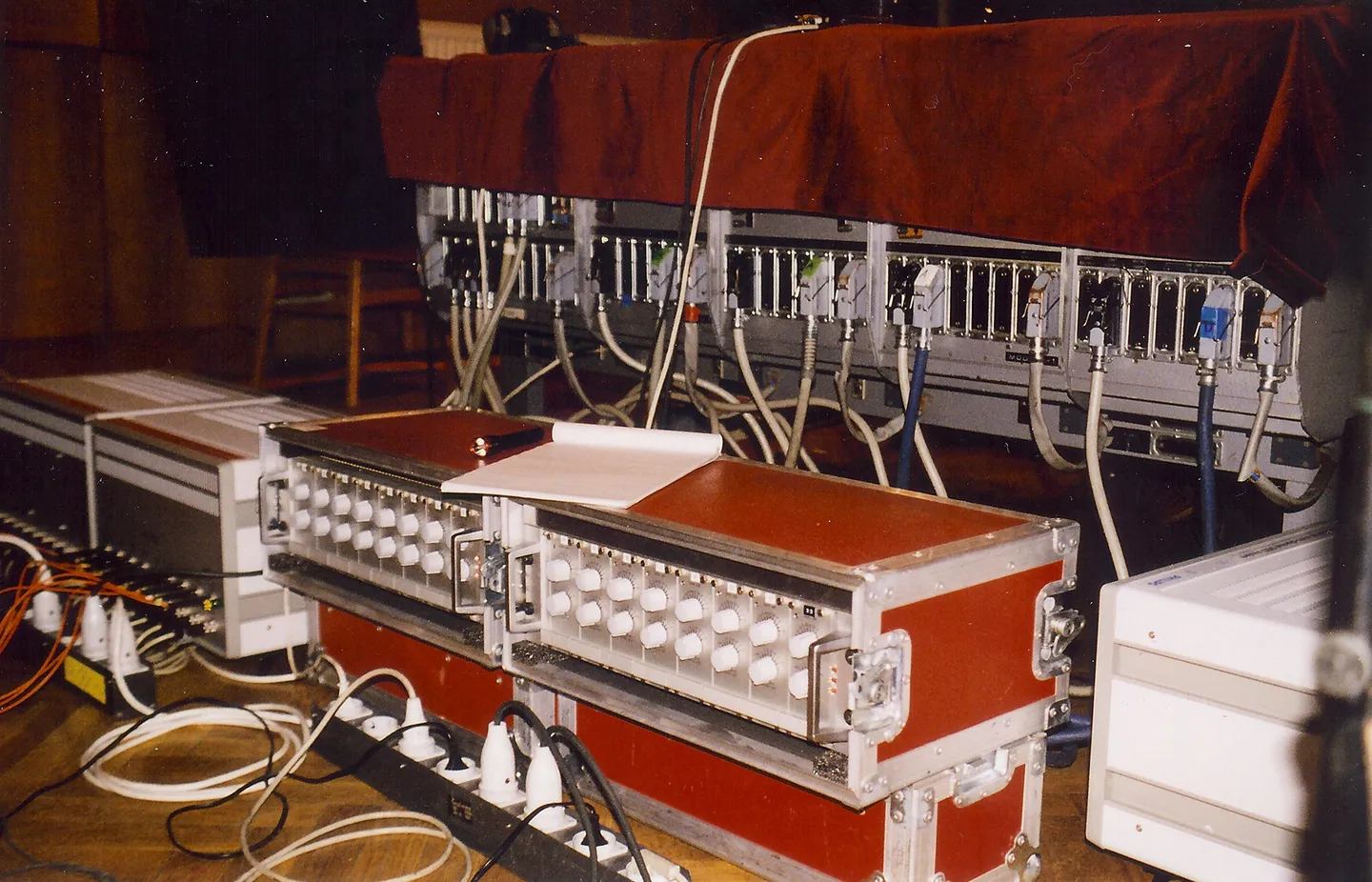
The Philips prototype DSD recording rig, in situ on a session. The custom-built Philips DSD unit sits among the modular microphone pre-amplifiers, hooked into the standard Polyhymnia signal chain.
Building the DSD chain
Just before this we also included new converters to upgrade the quality on our current recordings. From around 1990 we started using dCS 900 stereo AD and DA converters in the stereo recording chain. These were very high-quality converters, a step up in signal processing and audio results. For multichannel converters we started using the Benchmark 8-channel AD/DA, also 24-bit and possible to run at 96 kHz.
Slowly the world of computer audio became more important, and we started using the Sonic Solutions system for multichannel editing, still producing 24-bit DASH masters playing back digitally via the Technica del Arte mixing console.
The DSD prototype recording system by Philips was up to then the very best in audio-to-digital and digital-to-audio processing, and fully convinced me of the potential of the new SACD format. The first Philips SACD multichannel player as well as the Sony players also produced audio quality up to then unattainable for the consumer.
Budapest, June 1999: the first multichannel SACD
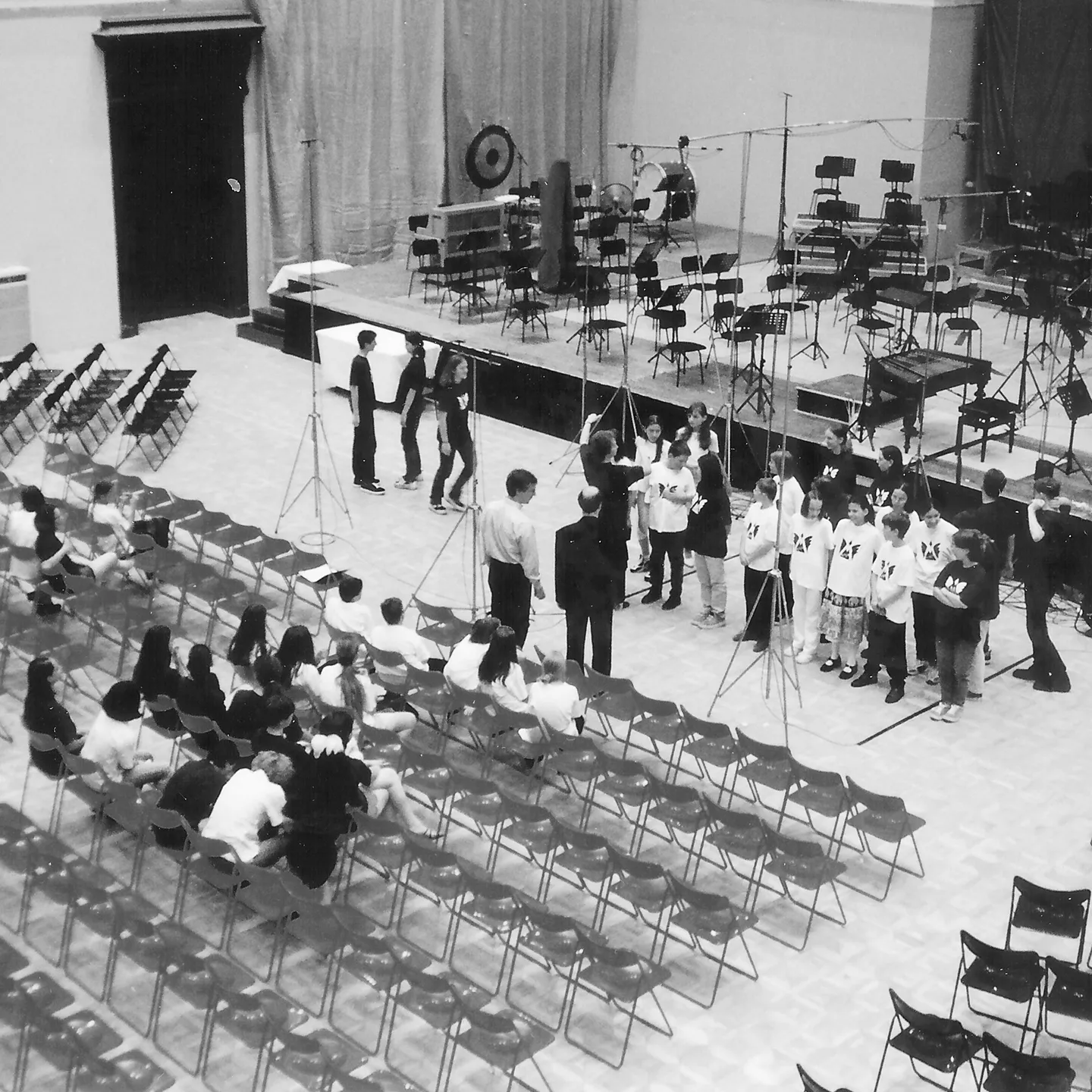
The very first multichannel recording released on SACD was a special project initiated by Philips Electronics to produce a special SACD disc for the introduction of the SACD format at the IFA exhibition in Berlin in 1999. We used the wonderful prototype 8-channel AD recording system from Philips Eindhoven, and a special editing function was applied to the recorded material by the physics lab in Eindhoven.
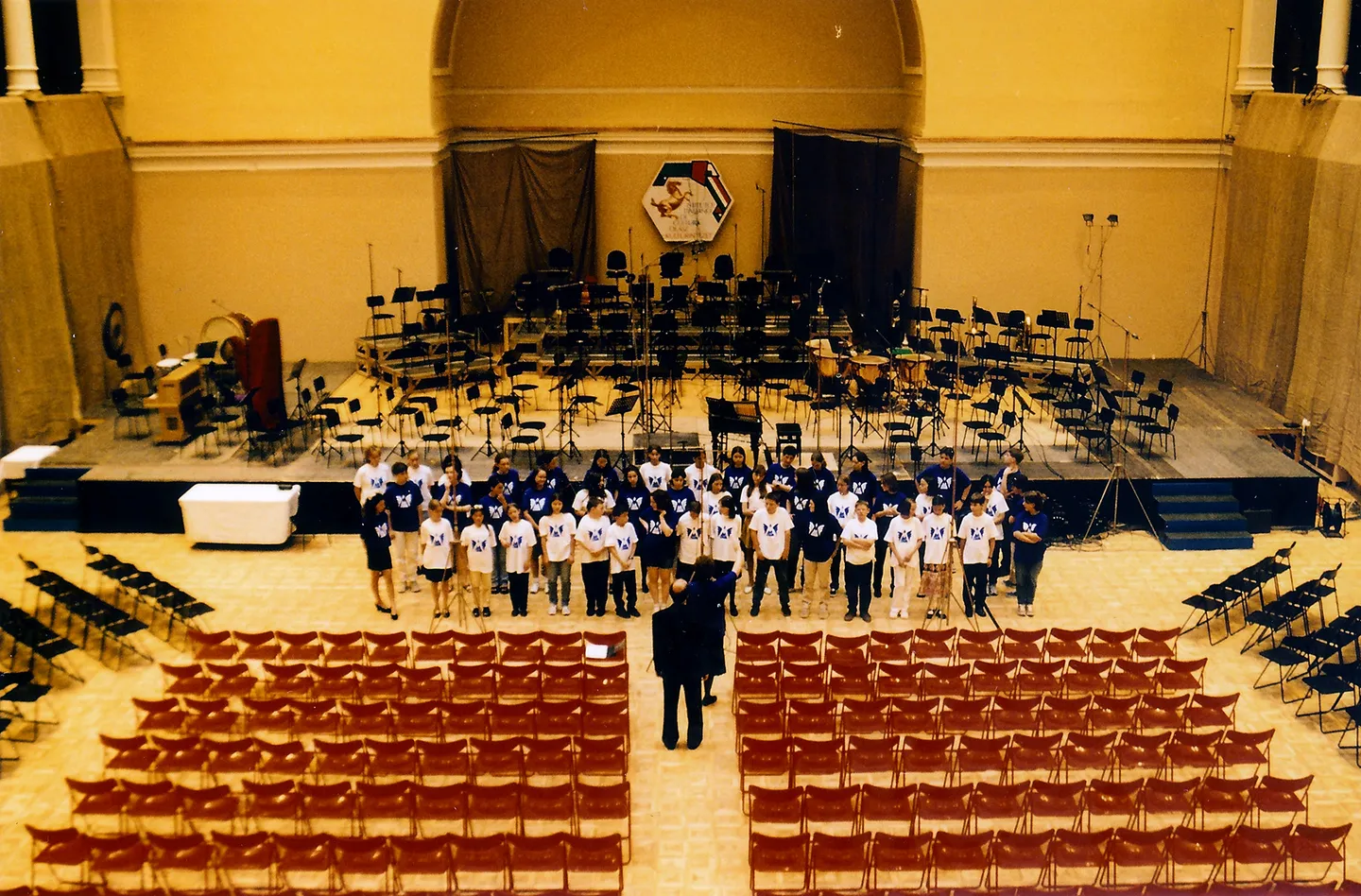
Budapest, June 1999. Setting up for the first multichannel SACD recording: the Budapest Festival Orchestra under Iván Fischer, with a children's chorus, recorded for the SACD launch at IFA Berlin.
At that time we were starting to work with a new company from Switzerland who produced a new, very flexible workstation with their own audio interface cards to record on a high-end Windows PC. With Merging, we introduced them to the DSD technical team in Eindhoven, and Philips worked together with them to produce a DSD interface version for use in Pyramix. This recording was made in June 1999 with the Budapest Festival Orchestra and Iván Fischer conducting, on a very special programme selected to demonstrate the audio and surround qualities of the new SACD medium.
The then commercially produced converters that could produce DSD audio were dCS (in stereo, so we combined four to record the eight channels available in Pyramix at the time) and EMM Labs Meitner 8-channel DSD AD and DA converter units. Those Meitner converters were also used by Sony to help studios produce DSD recordings using Sony's Sonoma DSD recording workstation platform with their own interface cards.
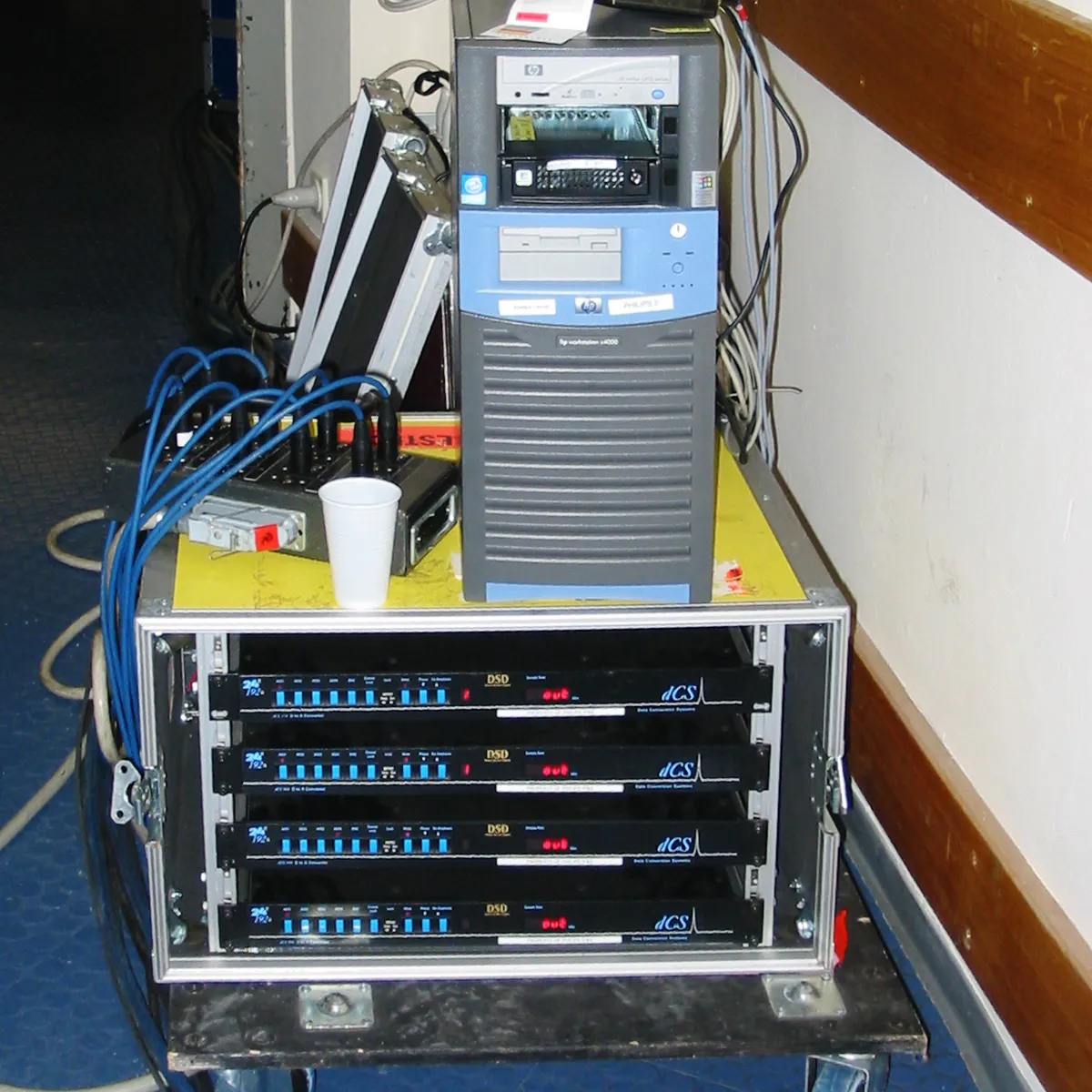
Above: Four dCS 972/974 DSD stereo converters stacked in a wheeled flight case, with the Pyramix HP workstation on top. Two converters paired per stereo bus, four together to cover the eight channels Pyramix offered at the time.
Below: EMM Labs Meitner ADC8 and DAC8 Mk IV 8-channel DSD converters above the Pyramix recording PC and its dedicated function keypad.
The introduction of SACD has had a major impact on the quality development of the audio-to-digital converters in professional audio.
Moscow and the Caro Mitis years
From 2000 onwards we kept focusing on recording in DSD and 5.1 multichannel.
And in 2003 we went to Moscow for the label Pentatone, to record with the Russian National Orchestra, and started there also a big recording project for the label Caro Mitis, with many great musicians from Russia, Ukraine, the UK, Sweden, Italy and more. These projects were the creation of biologist, musician and database company owner Michael Serebryanyi. One whole recording set from Polyhymnia, with two microphone pre-amp units (16 channel) and a modified Studer analogue mixing desk, with a Pyramix DSD recording set with Meitner AD and DA converters, was shipped to Michael Serebryanyi, and more than sixty recording projects were made with this set in the most wonderful recording acoustics.
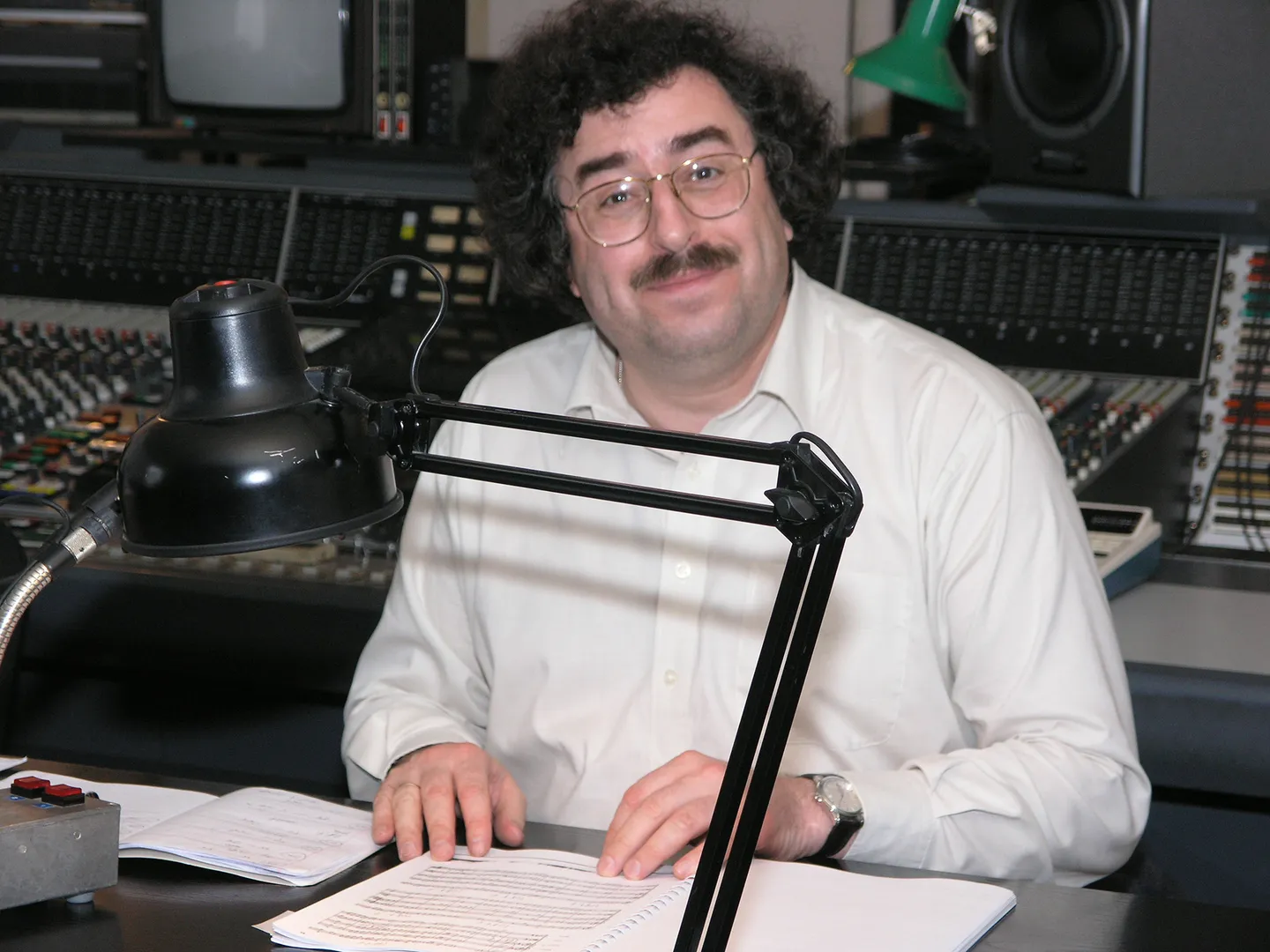
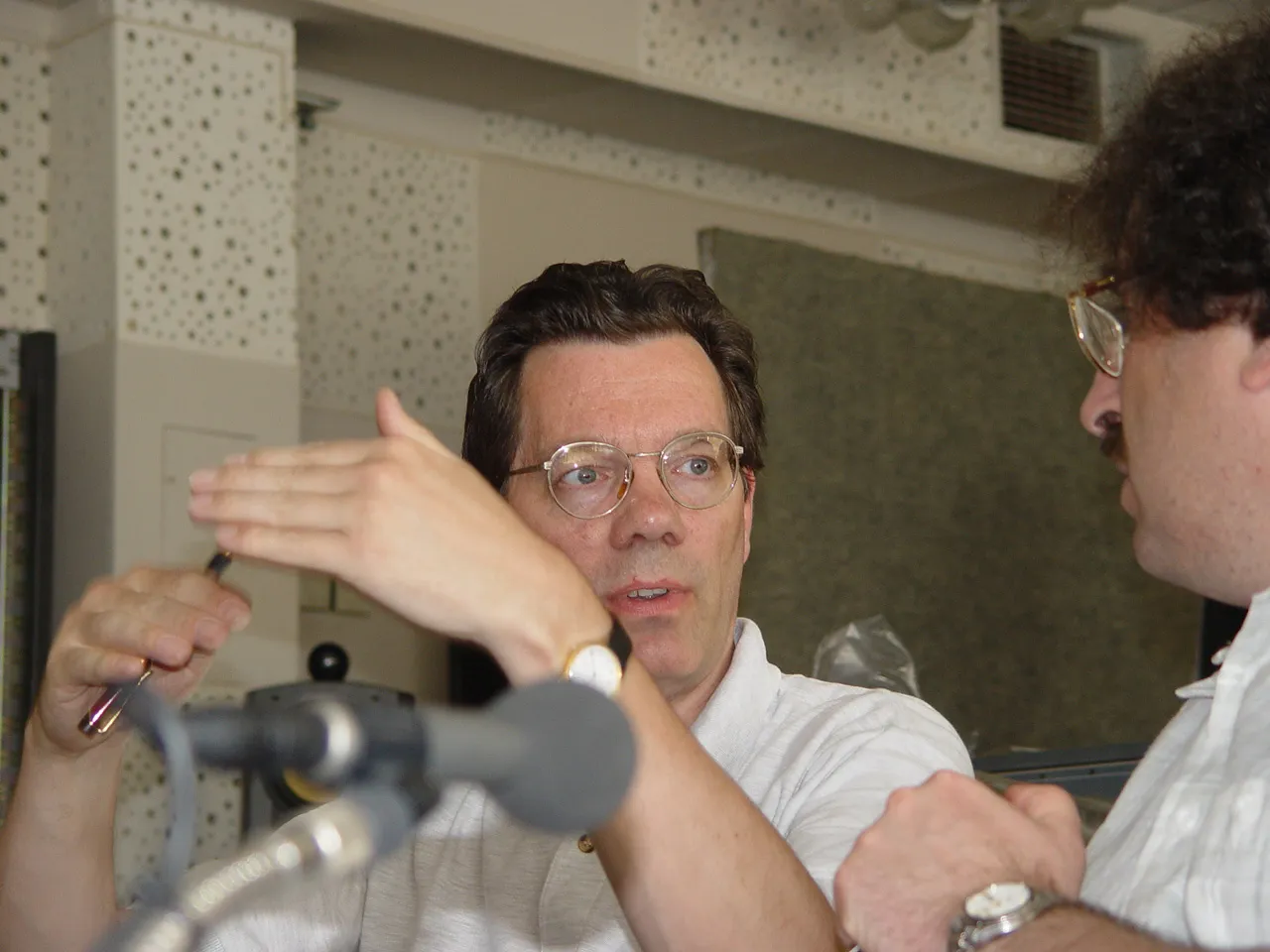
Above: Michael Serebryanyi at the recording desk. Biologist, musician, and the founder of Caro Mitis; the producer behind the more than sixty projects made on the Polyhymnia rig in Moscow.
Below: Erdo and myself in the control room on a Caro Mitis session.
From DSD to DXD: a new recording chain
Now these original DSD recordings are converted and remixed at a higher audio DSD processing standard than the original Pyramix system offered, and remixes into Atmos immersive are offered extra.
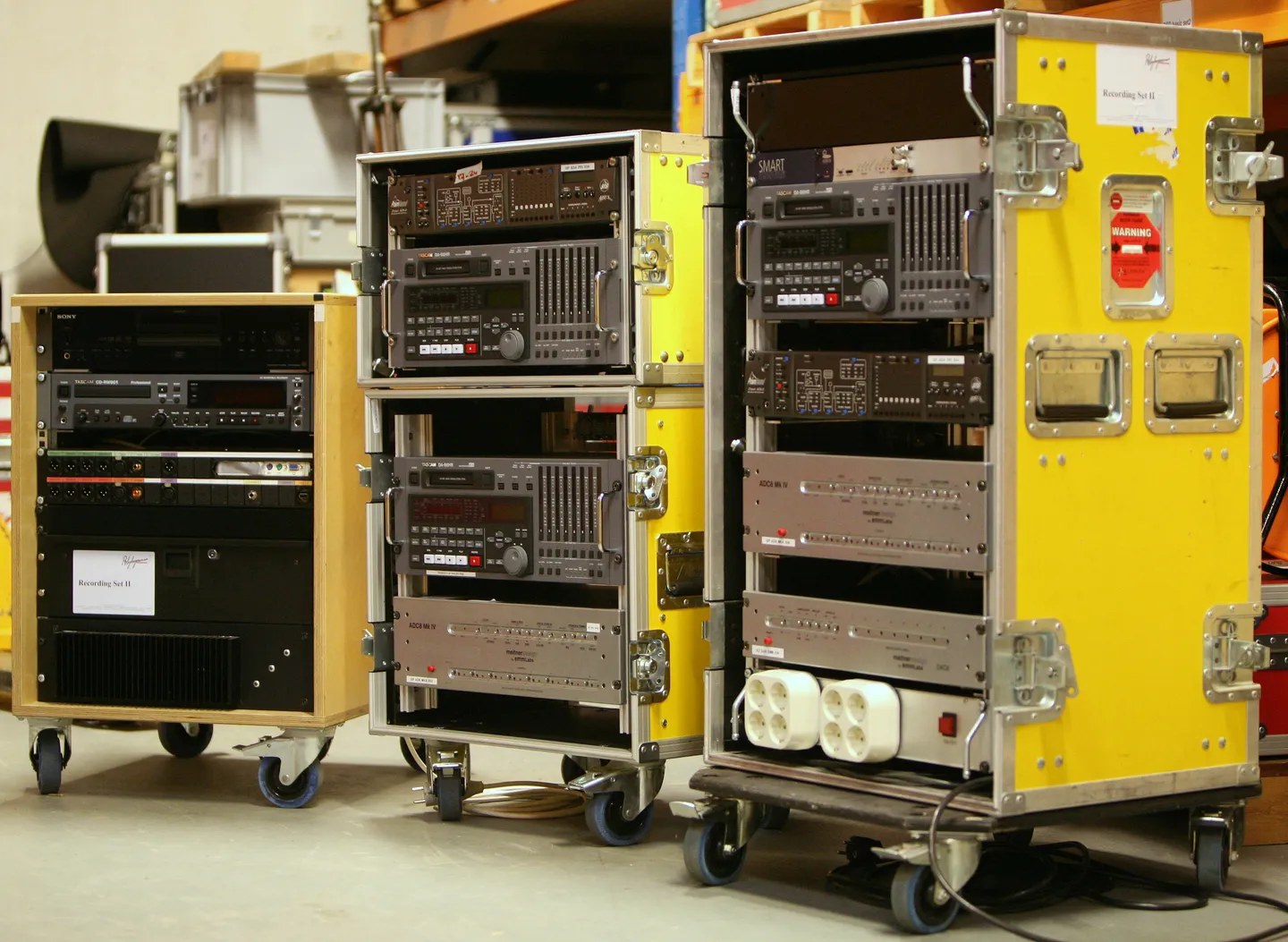
A complete Polyhymnia mobile recording set. Three wheeled flightcases, a similar configuration travelled to Moscow and stayed there for the Caro Mitis projects.
Around 2010 we moved once again the AD process, and are now using Merging AD converters that are connected to the workstation via a network protocol called Ravenna, making a DXD transfer of each individual microphone signal possible to a separate audio track, and offering a super short and transparent recording chain.