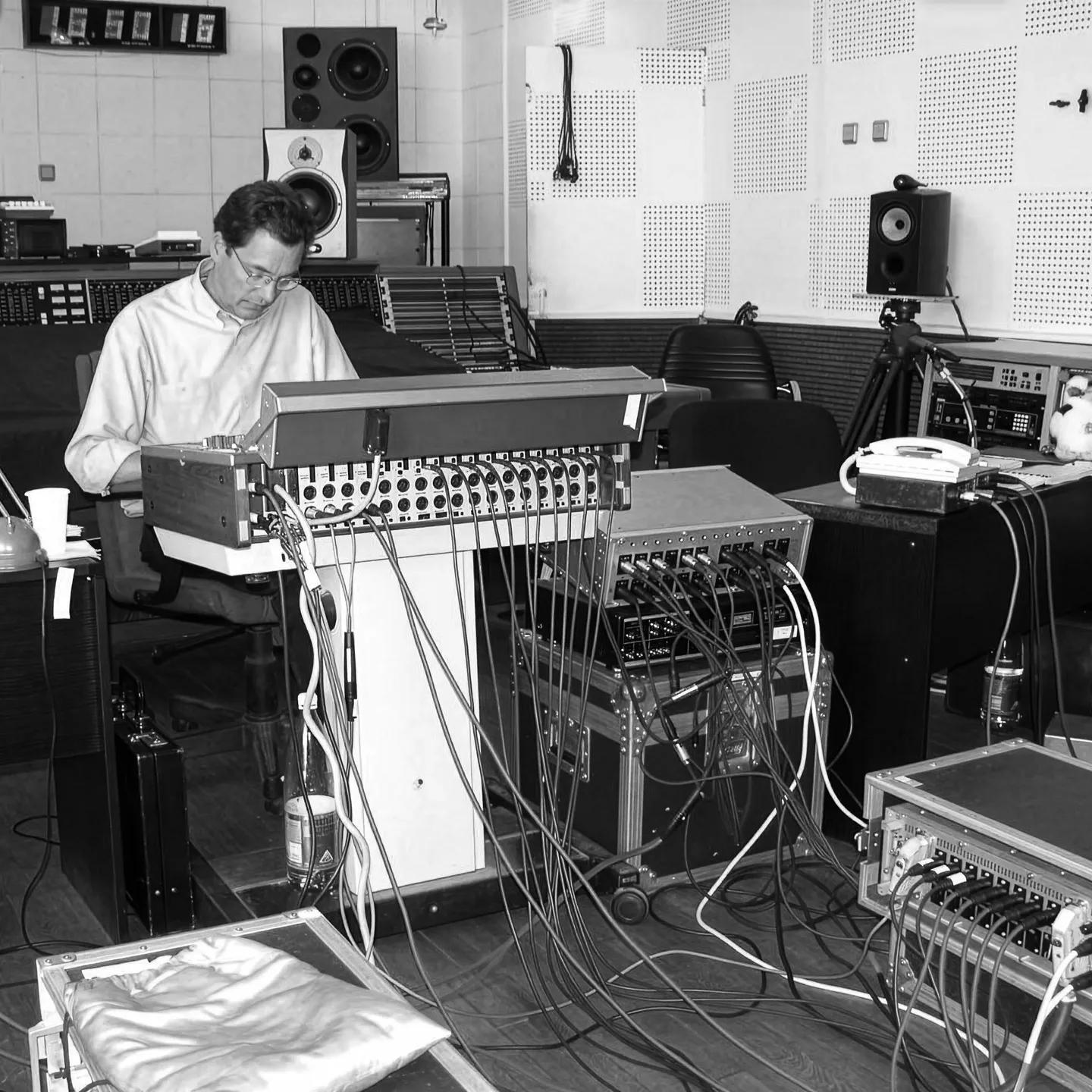
In January this year Brendon Heinst, with his label TRPTK, joined Polyhymnia International B.V., a cooperation that starts a new synergy that will bring out our individual qualities and will make new developments and improvements in our recording work possible.
We started working on a project to revive Polyhymnia’s recordings with Caro Mitis, all recorded in DSD digital format and that we are now planning to re-mix with even higher standard digital processing than was available at the time these beautiful recordings were made. That was only twelve to twenty-three years ago.
That made me think back at how the (digital) recording formats and systems changed over the time I have been active as a recording/balance engineer and producer. This is when Brendon proposed that I write about it for his blog on the TRPTK website. So here I go. The story turned out long enough that we have split it in two. This first part covers the years up to the Verdi Requiem in 1992. The second picks up from there.
Tape machines, Guildford, and the first encounter with PCM
From when I was about four or five years old, I remember my father coming home with an Uher analogue mobile tape recorder, and from then on tape machines have always been in my life. There was always music in my home, live on my father’s harpsichord and violin and later upright piano (which helped my sister to become a pianist), and via the crystal element record player, played back on a Philips radio, then stereo LPs on our first hifi set with Wharfedale speakers.
Later, I went to study Music with Applied Physics in Guildford, to prepare thoroughly for music recording. This time was very important for me, and I had lots of opportunities to experiment with different ways to record music. It was still the pre-digital recording period, and not only did I learn about analogue tape machines and Dolby-A noise reduction, I also learned to work with a professional Neve analogue mixer. After being there for two years and having worked with Studer A-80 and Ampex ATR-100 analogue tape machines, the highest analogue standards of the time, also splicing tapes with the razor, I heard a digital recorder for the first time. This was the Sony PCM 100 that recorded with 14-bit PCM resolution.
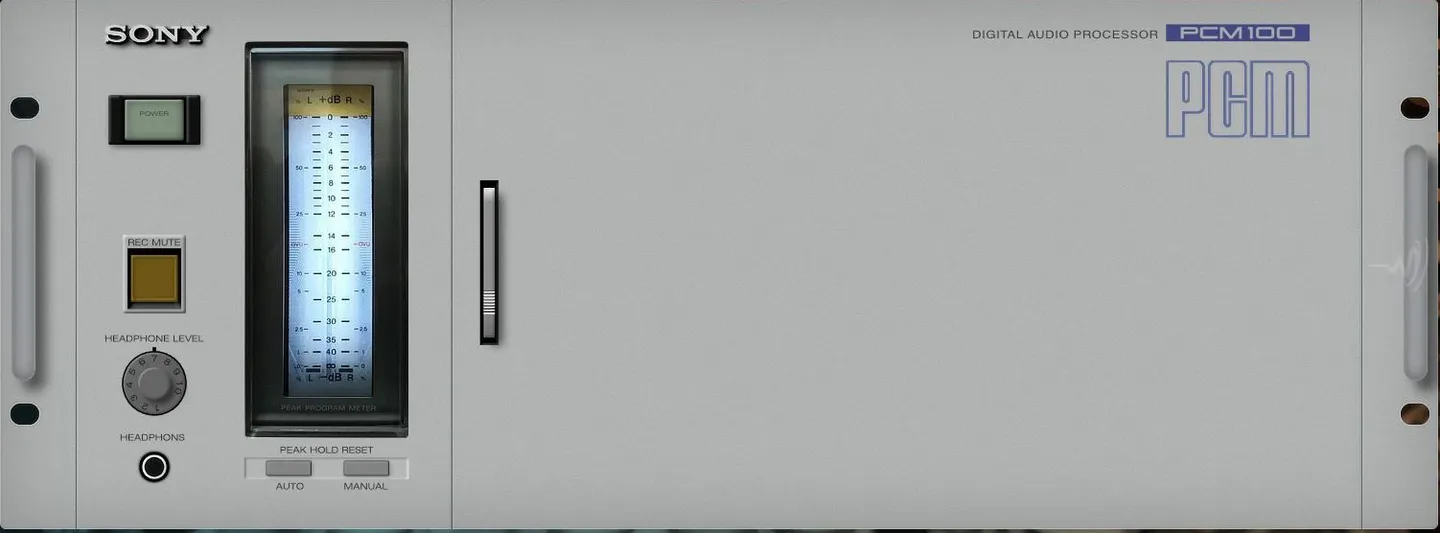
Sony PCM-100. The first digital audio processor I encountered while studying in Guildford. 14-bit, and to my ears at the time, a revelation.
The first time I used this processor was to record a piano recital, and I will never forget how impressed I was with the clarity of the reproduction and especially the total lack of wow and flutter, which made the sound stand out from all previous piano recordings I had been able to do until then.
Sony Industrial, the PCM 1610, and a CD that skipped on live radio
In 1982 I started my industrial year working with Sony Industrial in the Netherlands (still linked then with Brandsteder, importer of Sony consumer goods), working for the professional audio product manager Dik van Leeuwen. Within a couple of weeks of starting I was trying a PCM-based recording editing system that until then I had never seen. It was the PCM 1610 with a U-matic BVU200 video recorder, which recorded the digital data in black-and-white video frames, connected to a DAE-1100 digital audio editor. Then I went with Dik to demonstrate this system to different potential customers in recording studios in the Netherlands.
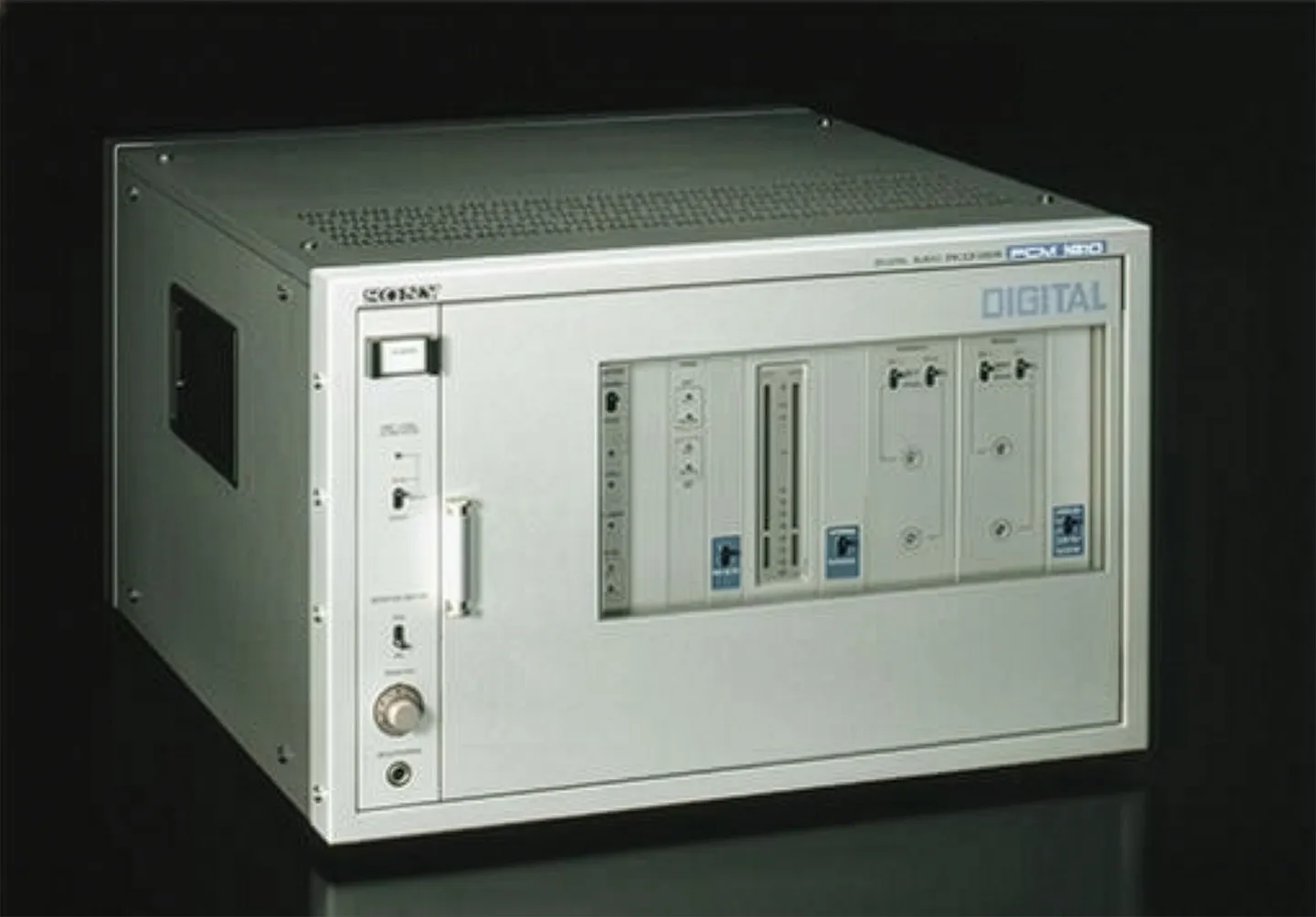
Above: Sony PCM-1610 digital audio processor. The first PCM editing system I worked with at Sony Industrial in the Netherlands, in 1982.
Below: Sony BVU-200 U-matic video recorder, top open, head drum visible. Digital audio was stored as black-and-white video frames on the U-matic tape, the cassette transport sits below.
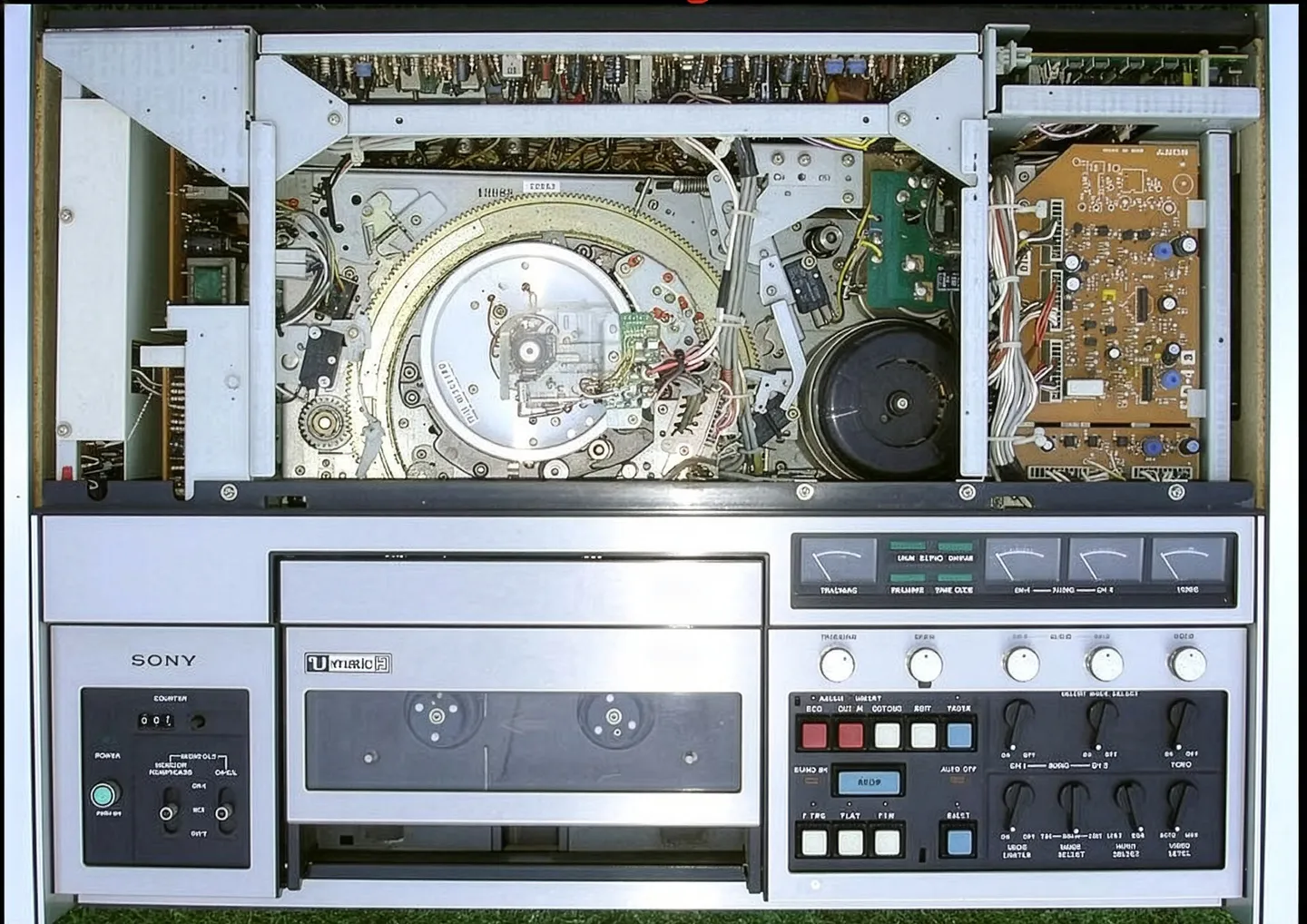
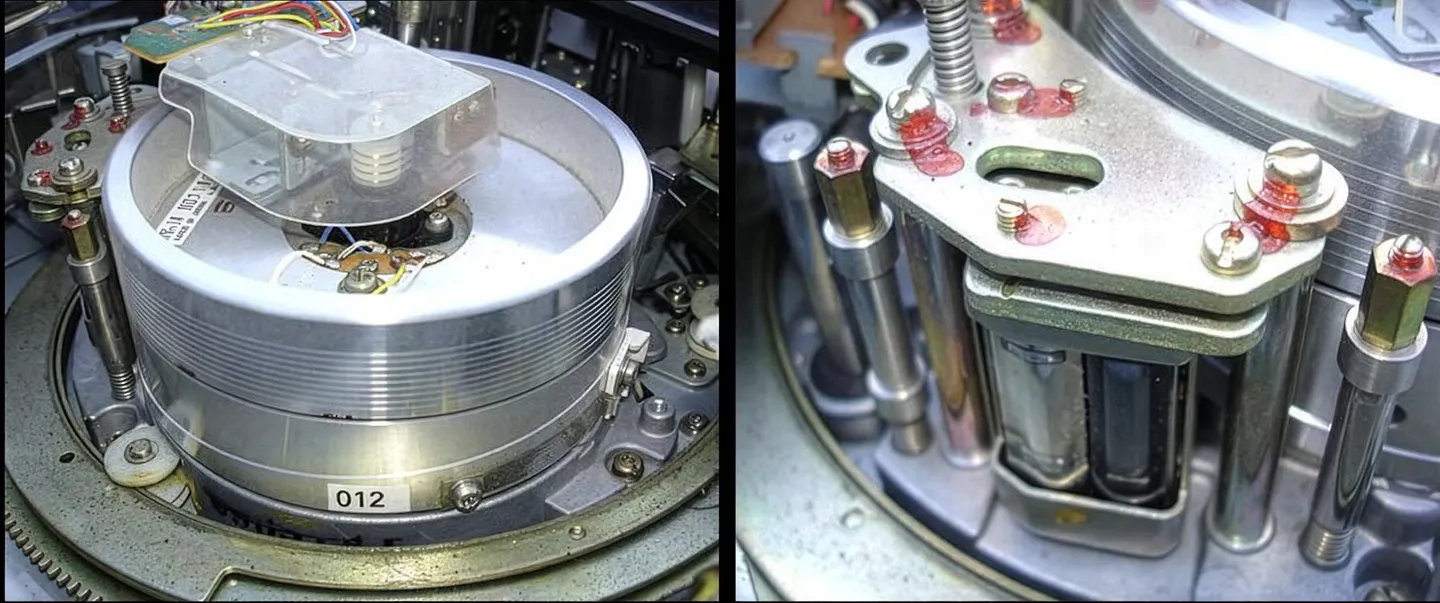
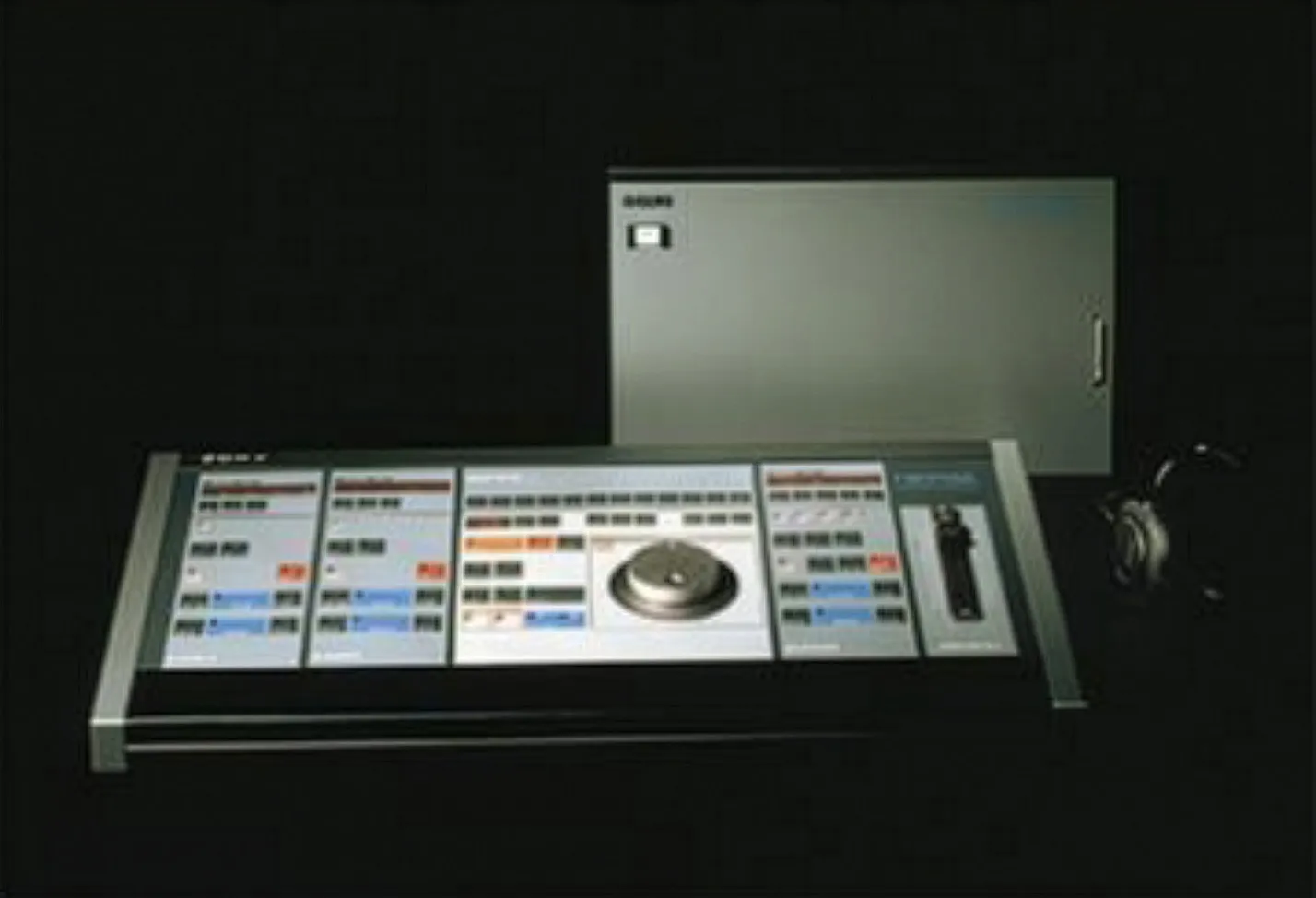
Sony DAE-1100 digital audio editor. The dial and transport keys for finding, auditioning, and crossfading edit points between two U-matic players and a recorder.
One project was operating a Sony professional broadcast CD player, with a dial to set the starting place of CDs. I have spent some time trying to find information on this machine, which I remember as a big console-based unit, but I cannot find any info about it now. It was on loan to Sony NL for a live radio broadcast to introduce the very first radio broadcast playing CDs. I only dealt with the machine for the first time a few hours before the broadcast started, using the very few CDs we already owned. I was able to set it up and try it before the broadcast. A panel of specialists from the Dutch music and radio scene were there to discuss this new technology in the programme. The CDs that were going to be used for the demonstration were brought by a Polygram executive, and handed to me during the broadcast.
The most awful thing happened. I started playing a DG Mozart piano concerto release with Rudolf Serkin playing the piano, and after a few minutes, around the start of the solo cadenza, the CD skipped and went back a bit. Almost like a vinyl LP could do when scratched. “A hanger.” When it went back the second or third time at the same place, I quickly used the dial to push the playback forward a bit and it played further without problems.
This led to a discussion in the panel. The Polygram rep said that he had played the CDs before without a problem. It turned out this particular CD player was also used to check CDs: its tracking was very precisely tuned and less forgiving than other CD players. Although there is something to the claim of perfect music forever (I still have fine working CDs from the early 1980s), this also showed that nothing is perfect.
Delivering the first PCM 3324 to Wisseloord
Going back to the digital recording systems of the time. The 1610 AD/DA processor that was used by Polygram to record classical music had almost monthly upgrades of the converter boards. That was one of the reasons I went to visit my future colleagues quite often during that time.
During my intern period I was also part of the delivery of the first Sony 24-track digital tape recorder, the first version of the PCM 3324. Together with David Walstra, then working for the Audio Engineering department of Polygram in Baarn, I did checks and measurements on it for two weeks. Finally I drove this machine to Wisseloord Studios (then owned by Polygram), the then most expensive Sony professional product in existence.
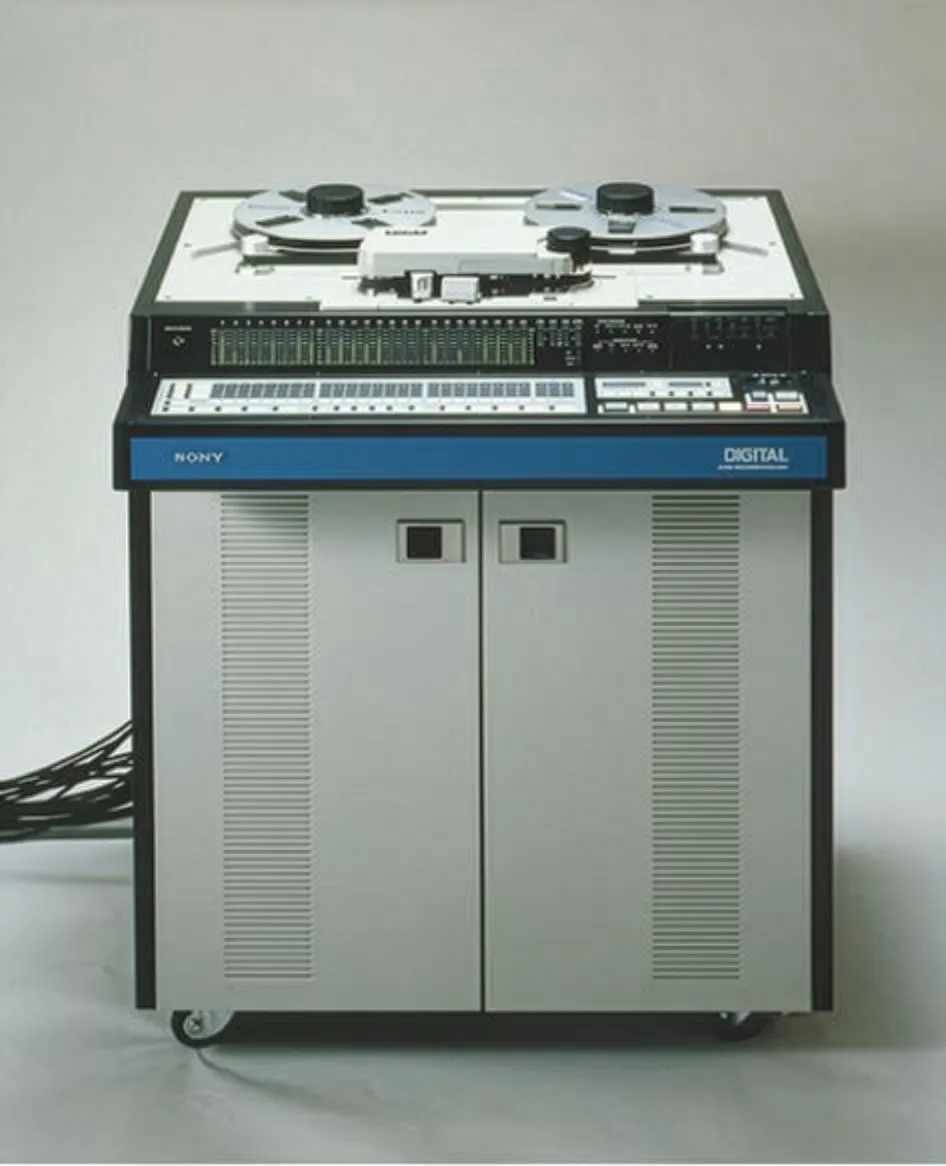
Sony PCM-3324 24-track digital tape recorder. The first one delivered in the Netherlands was checked, measured, and finally driven to Wisseloord Studios by myself.
At the same time as Sony had introduced these very expensive professional digital recorders, the consumer department had also released a digital processor that, combined with a (Betamax) video recorder, could record digitally. This PCM F1 was a fraction of the cost of the professional counterparts. Quite soon a German interface was built to use the F1 and output SDIF-2, making it possible to also use it as a professional alternative.
Philips Classics, and editing with three video machines
In 1984 I joined Philips Classics, after also working there the previous summer as a digital editor on several early digital recordings.
By then the PCM 1610 with DAE-1100 and three video machines, two players and one recorder, were used on all direct-to-stereo digital recordings that Philips Classics made. The editor allowed you to set an in-point from the recorder and from the player, from which both a few seconds of the music was stored in a solid-state memory. This memory could be played or scrolled using a dial to precisely set these points. The audio used in this memory was a poor-quality, low-bit and low-sample-rate signal in mono. Difficult to judge.
Then an audition of the edit could be done in real time and normal resolution. The video machines had to line up and start playing together, then at the edit point (when they often stopped to try again to line up the machines) the digital audio editor crossed the audio from player to recorder. Edit points could be altered a bit and auditioned again. The lining up of the machines took quite some time, which did not help the concentration. A slow and laborious process, but not slower than splicing up analogue tape, which was the way it was done before.
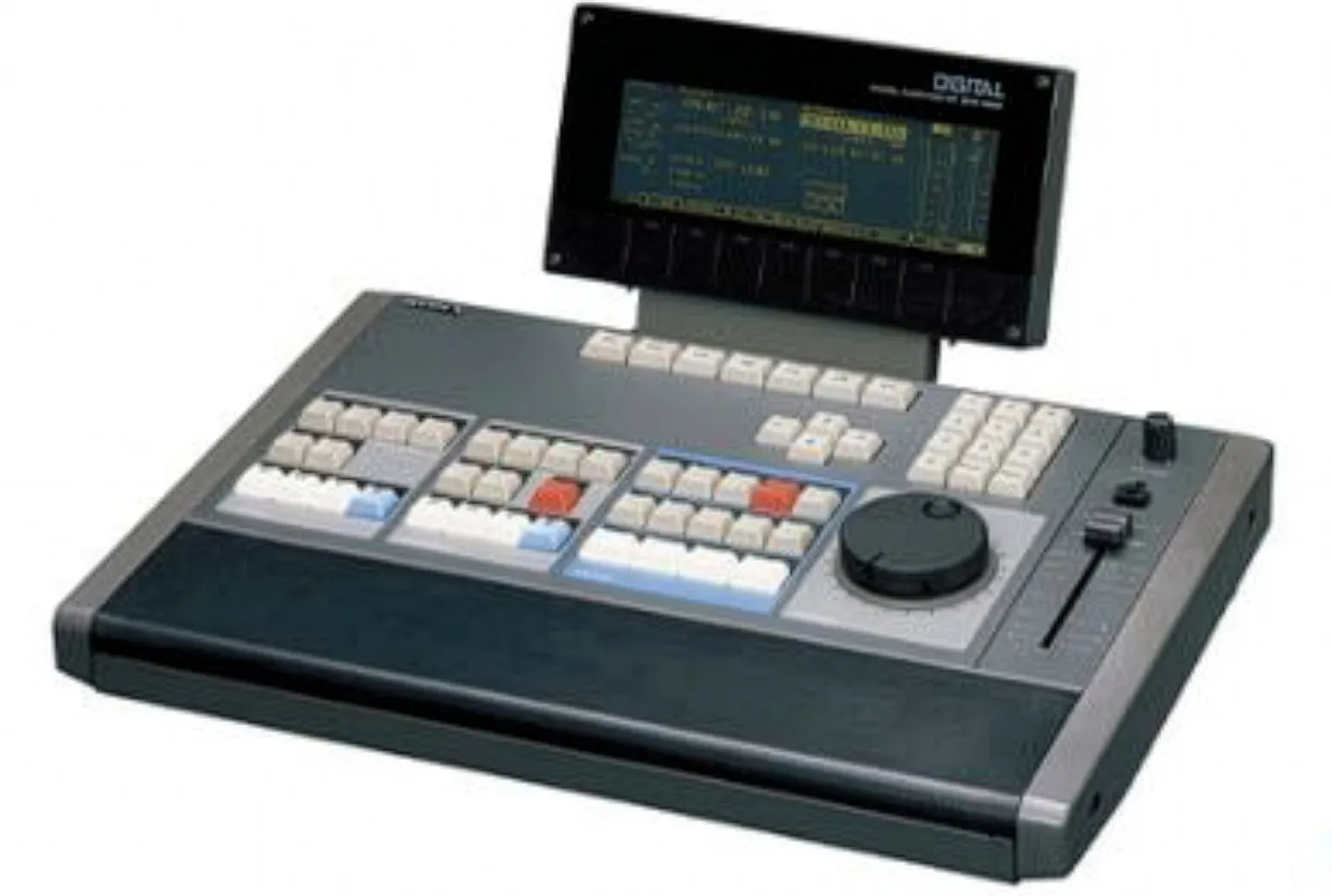
Sony DAE 3000. The faster successor to the DAE 1100, with a precise 16-bit stereo audio memory that finally made edit points easy to judge.
After a couple of years Sony introduced the PCM 1630, a better-quality replacement of the PCM 1610, and the DAE 3000 editor that worked principally the same as the DAE 1100 but much faster, and with a precise 16-bit 44.1 kHz stereo audio memory helping to judge the editing points a lot better.
Toward multitrack: Soundstream, the 3324, and the Verdi Requiem
Not very many multitrack recordings were done by Philips Classics at the time. Only a couple of ways before the Sony 3324 was introduced into the department. Some recordings were done with four tracks using a video system locator to synchronise two 1610/1630 systems to record the four tracks, then mixed to stereo by analogue mixing and edited. One time, on the last recording of Alfred Brendel and ASMF with Neville Marriner of the Mozart piano concerti, a Soundstream digital recorder, using a big computer stationary head recorder with four tracks (with converters running at 50 kHz sampling at 16-bit) was used parallel to the Sony stereo recorder. That had to be edited later at Bertelsmann in Germany, as it was the only place in Europe that owned a Soundstream editing system. The multi-track edit was then remixed via analogue mixing desk to stereo.
In 1989 I used a Sony 3324 24-track recorder to record Mozart’s Die Zauberflöte in London with the ASMF and Neville Marriner. At the time Decca, part of Polygram and one of the three departments of classical music with Deutsche Grammophon and Philips Classics, had built an 8-channel digital mixer. Three of these were used to mix takes from the 24-track to stereo, which were then edited in stereo. Any corrections had to be mixed again to stereo for re-editing.
This was the main system for multitrack recordings at the time (most recordings still were done straight to stereo using the Polygram analogue module mixer) until in 1992 I recorded the Verdi Requiem with John Eliot Gardiner, and we had adopted a Lexicon Opus digital multitrack editor, so that we ended with a digital 24-track edited version for mixing. In Galaxy Studios in Belgium, who were still finishing their newly built studio, they had bought a Neve Capricorn digital mixer, and because this was a mixer with automation, I could go there to mix the Verdi Requiem.
Doubling down on the analogue signal path
After the introduction of the stereo PCM 1630 it was obvious to all at Philips Classics that the development of the audio quality of the digital analogue-to-digital converters was very much limiting the audio quality of our recordings. We started looking at better converter options and as we acquired the Lexicon 480 digital reverb, which had its own AD conversion, it turned out to be better than the standard PCM 1630 ADs. So we used that with the S-DIF outputs to record the stereo.
On a side note: because we still judged the digital audio to be lacking in quality, and assumed it would improve over time, the recording department of Philips Classics, which had also a lot of recording equipment built and developed in-house, decided to concentrate this development on the analogue audio chain. The module mixers were in-house-built equipment, and a huge upgrade was implemented, by changing all the input transformers to high-quality Jensen transformers and by selecting new operational amps in the signal path, to make the rest of the signal path without any coupling capacitors.
Not much later a big project started: designing and building new microphone pre-amplifiers with a no-limit quality objective, and designing and building new microphone buffer amplifiers. It took several years of development by Jeroen Oldedubbeling, always conferring with the engineers (using their ears quite often), and to date we enjoy the results: the best analogue signal path that I ever encountered as the basis of our recording equipment.
Part 2 follows from here, with SACD, the Caro Mitis recordings in Moscow, and the work going on now to bring those recordings back.