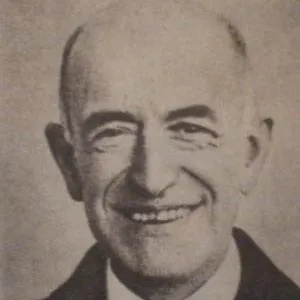
Biography
In the great flowering of Spanish classical music at the beginning of the twentieth century, Isaac Albéniz, Enrique Granados, and finally Manuel de Falla brought international sophistication to what had long been a peripheral musical culture. Each spent formative years in Paris, then the artistic capital of Latin Europe and home to figures such as Claude Debussy, Maurice Ravel, and Paul Dukas. Crucially, they transformed distinctively Spanish material into thoroughly modern works, offering the world a new perspective on Spain’s cultural identity.
Among them, Falla brought this achievement to its fullest realization. Unlike his Catalan predecessors, he was Andalusian, and the musical character of southern Spain—particularly flamenco and the intensely expressive vocal tradition known as cante jondo—lay at the core of his creative voice. This influence is most vividly heard in El amor brujo (1915), a dramatic portrayal of gypsy life originally conceived as a theatrical work for flamenco singer, actors, and chamber orchestra. Later orchestral and ballet versions, including songs for mezzo-soprano, soften the rawness of the original conception without diminishing its power.
In his early twenties, Falla moved with his family to Madrid, where he studied and became part of the Spanish musical elite. From 1900, partly to support his family during financial difficulties, he taught piano and composed operettas in the popular zarzuela genre, none of which survive complete. His breakthrough came with the short opera La vida breve, which won a major national competition in 1905. When repeated attempts to stage the work failed, and encouraged by Joaquín Turina and Albéniz, Falla left for Paris in 1907.
Falla remained in Paris until the outbreak of the First World War, becoming fully integrated into its musical life. He secured a publisher with his Four Spanish Pieces for piano and finally saw La vida breve staged in Nice. On returning to Madrid in 1914, he was firmly established as a leading composer and entered one of his most productive periods. Works from this time include El corregidor y la molinera (1917), an Andalusian dance piece that attracted the attention of Sergei Diaghilev, who commissioned Falla to expand it into a full-scale ballet.
The resulting work, El sombrero de tres picos (The Three-Cornered Hat), was premiered in London in 1919 and became one of Falla’s most enduring successes, especially through the orchestral suites he later extracted from it. During these years he also completed the more expansive Noches en los jardines de España, effectively a piano concerto in all but name, and began work on the puppet opera El retablo de Maese Pedro, based on an episode from Don Quixote by Miguel de Cervantes.
In 1920, following the deaths of his parents, Falla moved to Granada. Although his output diminished further, his stature grew, and he became a revered national figure. After living through the Spanish Civil War, the outbreak of the Second World War drove him into exile in Argentina, where he died. At the time of his death he left unfinished the monumental opera Atlàntida, a project that had occupied him for over twenty years. Thanks to the substantial sketches he left behind, a performable version was eventually realized, and the work was premiered in 1962 at La Scala.