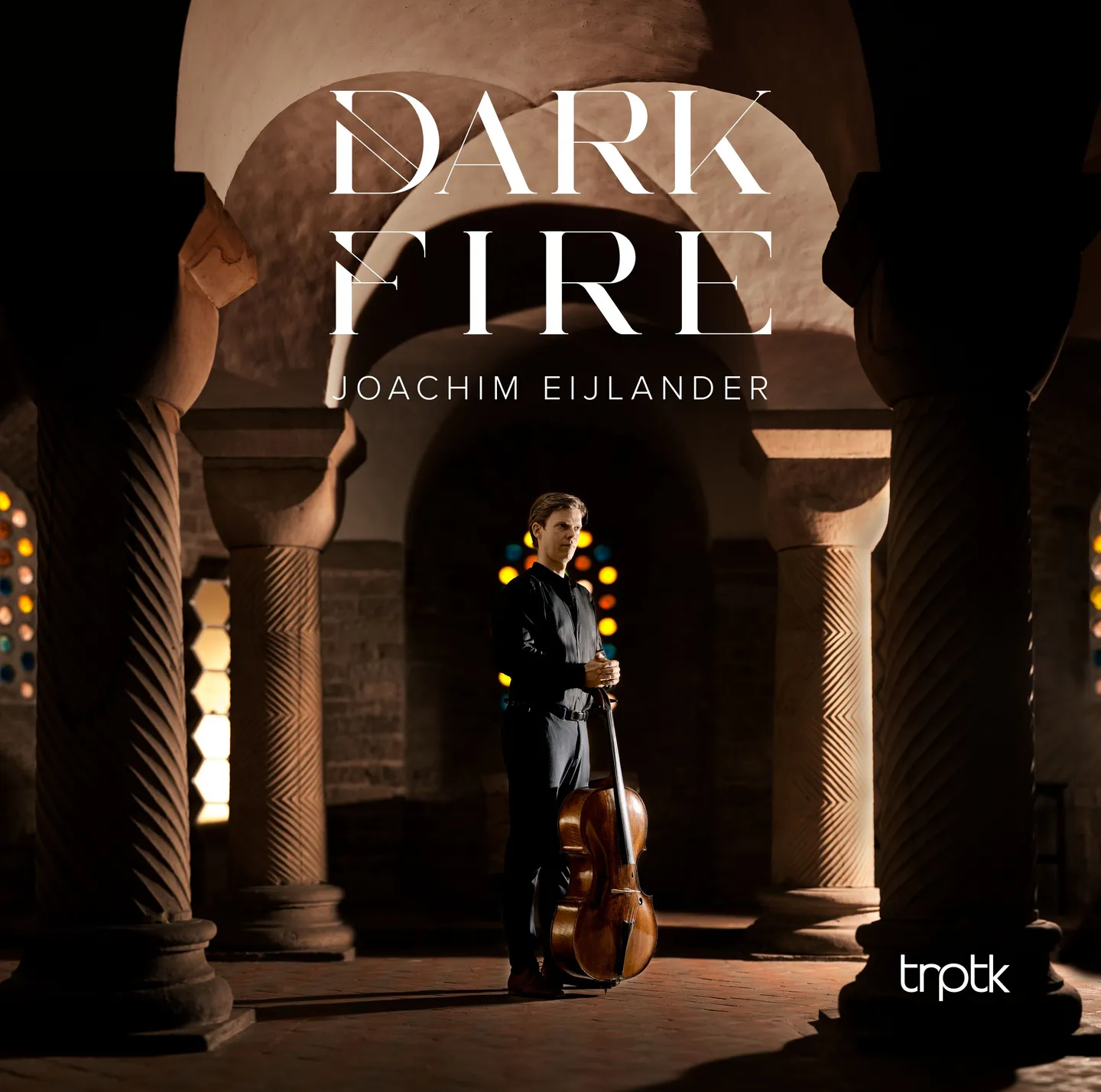
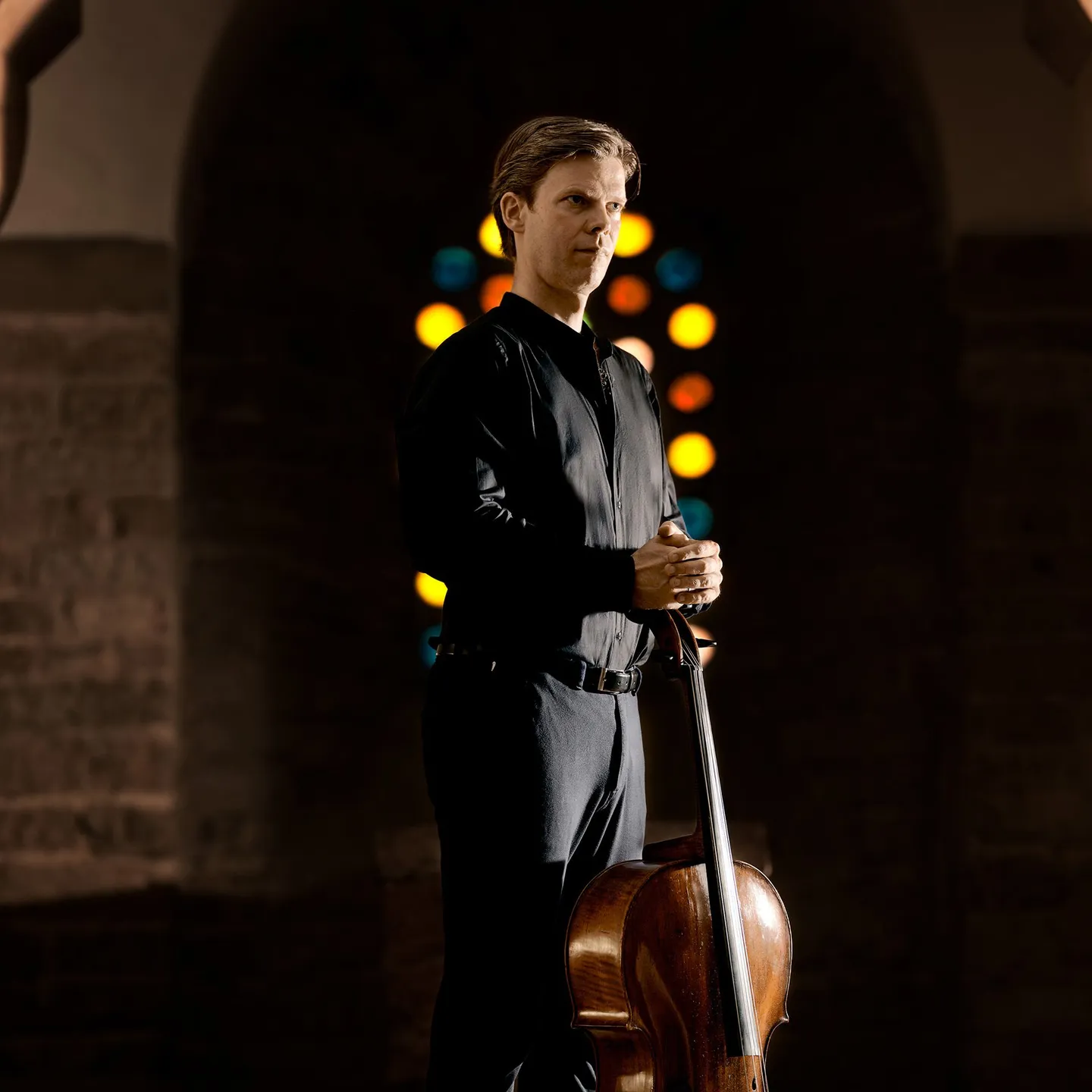
Album cover for Dark Fire by Joachim Eijlander

Dark Fire

Joachim Eijlander

About the album

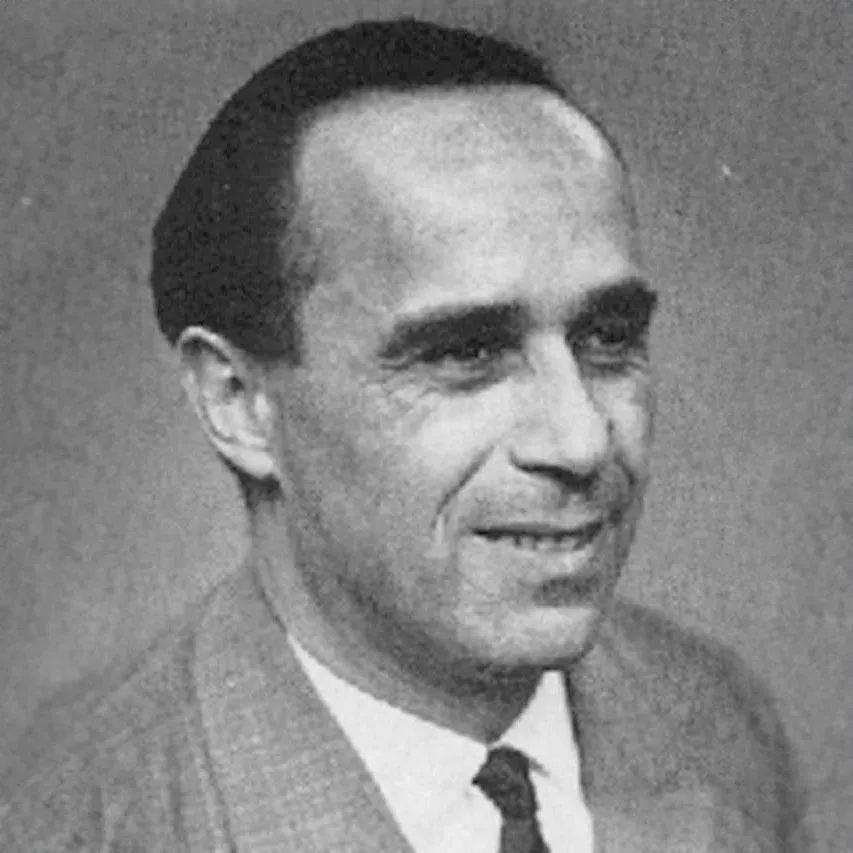
Philosopher Martin Heidegger (1889–1976) described the encounter between the organised philosophical world of the ancient Greek and the mystical, abstruse world of the East as a dark fire. This would have caused the enlightenment in Greek poetry. It’s unclear what Heidegger really thought about it, but I found the mental image of a dark fire lit by this chance meeting beautiful and highly inspiring. For Heidegger, this was mainly about the East and West, but to me it’s about an encounter with the realms of other people’s experience, principally those of musicians. When two energies meet for the first time and are fully open to the experience, a new mirror image of themselves they have never seen before will arise. This is also why “Dark Fire” is also a force of self- recognition. Turkish composer Ahmet Adnan Saygun, a contemporary of Heidegger, whose Partita plays a central role on this album, also describes this force with the quote on the previous page.

Together with duduk player Kadır Sonuk I play Sarı Gelin, an Azerbaijani traditional. Through my collaborations with Kadır, I learned to play and think more outside of the confines of the notes. To trust my intuition and to dare to create music in the spirit of improvisation. I also made an arrangement and improvisation to a song by Aşık Veysel, together with Kadır.

In my musical collaboration with classical guitarist Izhar Elias, I play two works by Spanish composer Gaspar Cassadó. It was only when I started to play these pieces lighter, more transparent, and less forceful that Ihzar and I began to understand each other, and I could fully get in touch with his timbre. I grabbed my bow a bit more towards its middle, giving me better control over my articulation – and actually got to play a bit more like a guitar.

With Vincent van Amsterdam on accordion, I had to work in a total opposite fashion; this duo demanded a more broad and continuous sound. With him, I played Sachidao from 5 Pieces on folk themes by Georgian composer Sulkhan Tsintsadze. It’s such infectuous music, grasping at you and never letting go. With pianist Helena Basilova I play three other movements from this cycle, beautifully written for cello and piano; clear, harmonic and balanced.

The starting-off point for all these encounters with my duo partners is formed by solo pieces. This album opens with Ahmet Adnan Saygun’s Partita for solo cello, Op. 31, enclosed between its meditative sounds at the beginning and the end. It’s with this droning low note together with the melody on top that you can already imagine a duet with cello and duduk. The highly colorful Suite for cello solo by Gaspar Cassadó is followed up by duos with classical guitar. Particularly in Lamento de Boabdil, you can clearly hear the Arabic influence on Spanish music. Lastly, the seldomly-performed Toccata for cello solo by Sulkhan Tsintsadze conjures up a musical collaboration with other instruments.

Tracklist

Ahmet Adnan Saygun

Partita for solo cello, Op. 31

I. Lento3:42
II. Vivo2:05
III. Adagio5:53
IV. Allegretto3:32
V. Allegro moderato3:14

Anonymous

Sarı Gelin3:50
Hiçliğe Yolculuk7:08

Gaspar Cassadó

Suite for cello solo

I. Preludio-fantasia. Andante5:59
II. Sardana (danza). Allegro giusto4:50
III. Intermezzo e danza finale5:55
Requiebros5:24
Lamento de Boabdil3:46

Sulkhan Tsintsadze

Toccata for cello solo2:56

5 Pieces on Folk Themes

No. 1, Villain Song on a Carriage5:27
No. 2, Tchonguri1:32
No. 3, Sachidao2:46
No. 4, Nana3:33
No. 5, Dance Tune2:49
Total playing time1:14:21

Artists

Composers

[Eijlander, Sonuk, Elias, Basilova and Van Amsterdam] bring out the inner beauty of these pieces in full with their technically flawless and intrinsically rock-solid playing. Music in which the unexpected, unusual, peculiar and eccentric predominate, with the additional recommendation that the recording made by TRPTK's Brendon Heinst is downright sublime.

Aart van der Wal, Opus Klassiek

Two worlds touching. The West with its philosophical leanings and the more mystical East. Cellist Joachim Eijlander has enlisted a selection of top soloists to realize this 'meeting' of contemporary, not everyday repertoire with traditionals. They include duduk player Kadir Sonuk, guitarist Izhar Elias and accordionist Vincent van Amsterdam. Intriguing repertoire in sublime performances. A CD to really sit down for.

Rudolf Nammensma, Leeuwarder Courant (Best Albums of 2020)

It is a particularly varied piece, with the second 'Vivo' and the third movement, 'Adagio' particularly striking, the former for its rhythmic patterns, the latter for its poetic lyricism.

Ben Taffijn, Nieuwe Noten

Rich and varied repertoire, beautifully put together and fantastically performed.

Peter van der Lint, Trouw

Dark fire is a very strong album. In terms of sound and style, there is much variety and surprise, Eijlander's tone is alternately tender and dangerously rough. [...] melancholy, rattling, rousing, folkish and of course dark-fiery.

Joep Stapel, NRC

Above the sonorous, stately bourdon quint in the cello flutter the coloratura of the duduk, with its wistful sound like the call of a night bird. Pure magic, especially where the two instruments eventually blend almost in whispers. These two intimate lamentations form the chilling climax of the CD.

Margaretha Coornstra, Nederlands Dagblad

Very special are the two duets with duduk player Kadir Sonuk, if only because the cello seems to merge completely with that oriental instrument. The duets with guitarist Izhar Elias, accordionist Vincent van Amsterdam and pianist Helena Basilova are also completely successful.

Erik Voermans, Het Parool

Sonuk leads the dance - he is also a dancer - with great suppleness, allowing the occasional hoarse edge. Beautiful vibratos complement the mystery of feminine beauty, the cello acts as basso continuo and thus a paternal rest.

Wynold Verweij, Klassiek Centraal

There is every reason to be pleased and happy with this performance by the cellist in which all involved put forth the best they have to offer musically.

Jan de Kruijff, Musicalifeiten

Credits

Producer, recording & mastering engineerBrendon Heinst
EditorHans Erblich
Piano technicianMatthijs Jongepier
Photography & artworkBrendon Heinst
Liner notesJoachim Eijlander
GenreRomanticContemporaryWorld Music
InstrumentationSoloChamber
Recording dateAugust 2020
Recording locationWestvestkerk, Schiedam (NL)
Recording formatPCM 352.8 kHz 32 bit
Mastering formatPCM 352.8 kHz 64 bit
Release dateNovember 27, 2020
Booklet

Technical specifications

MicrophonesDPA d:dicate 4006ADPA d:dicate 4015ASony C100
AD/DA conversionMerging Technologies HapiMerging Technologies Anubis
Master clockGrimm Audio CC2
MonitoringKEF Blade TwoKEF LS50 MetaHegel H30Hegel C55Sennheiser HD800s
Power conditioningFurutech Daytona 303ECAD Ground Control GC1
CablingFurutech custom microphone cablesFurutech custom power cablesFurutech custom loudspeaker cables
Misc.JCAT NET Card FEMTOJCAT M12 Switch GoldFurutech e-TP609E NCFFurutech NCF BoostersRTFS Acoustics