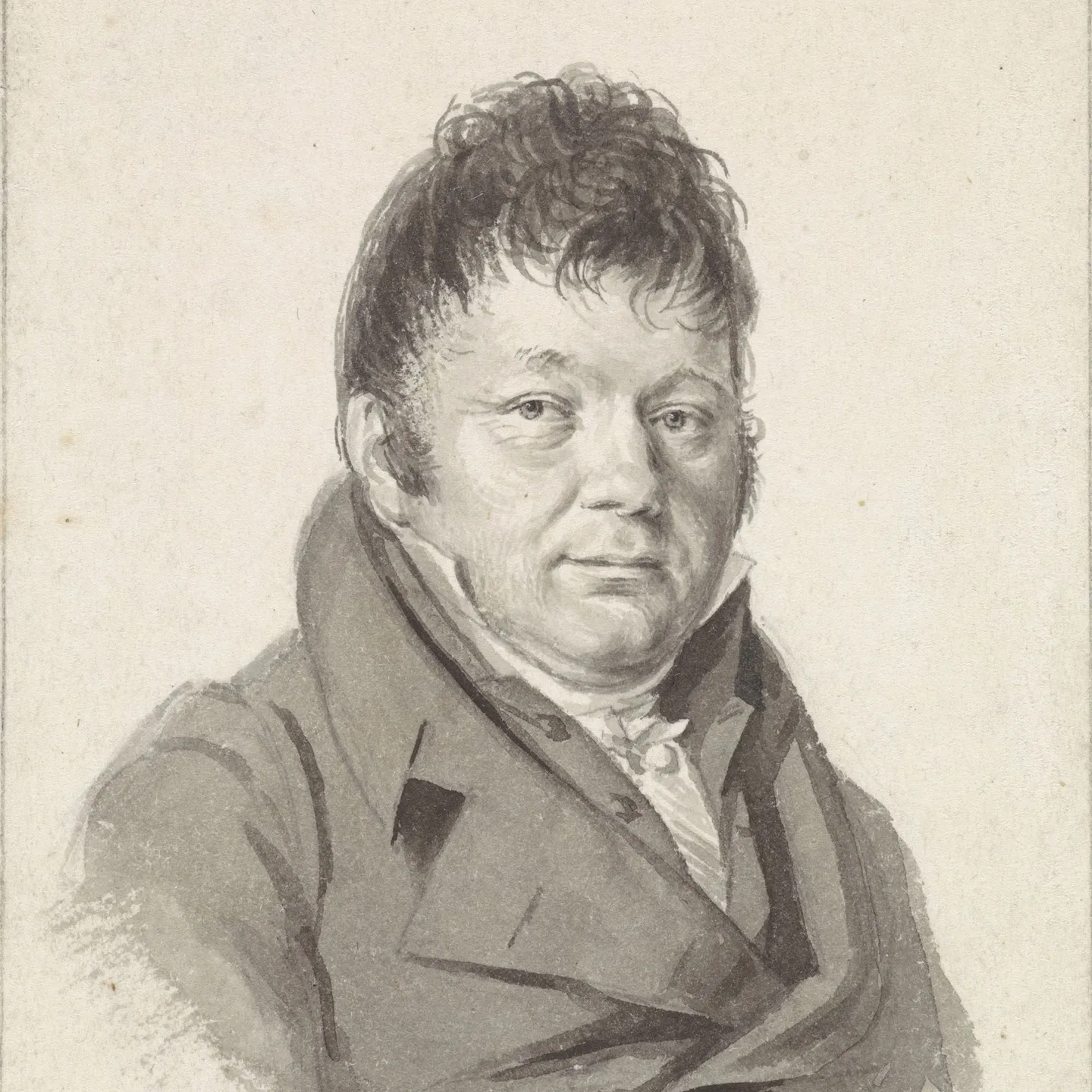
Biography
Carolus Antonius Fodor, also known as Carel Antoon Fodor, emerged—after Johann Wilhelm Wilms—as the most important Dutch composer of the late Classical and early Romantic periods. His oeuvre includes three symphonies, six piano concertos, five piano quartets, solo piano works, and various choral compositions. His music follows in the tradition of Joseph Haydn, while his later works appear to draw their main inspiration from Franz Schubert. Fodor usually signed his works as Antoine Fodor to distinguish himself from his brothers Josephus Andreas and Carolus Emanuel, who were also active in music as a violinist and harpsichordist respectively. In addition to his work as a composer, Fodor gained renown as a piano virtuoso, pedagogue, and conductor. For many years he led the orchestra of Felix Meritis in Amsterdam and also made significant contributions to music scholarship. Much of his music remains unavailable in reliable editions. His only opera, Numa Pompilius, is considered lost.
1768–1789
Carolus Antonius Fodor was born on 12 April in Venlo as the youngest son of a Hungarian officer and violinist who had settled in the Netherlands and married the Dutch Elisabeth Messemaekers. Like all the children in the family, young Fodor received a solid musical education and soon showed exceptional talent as a pianist. At the age of thirteen, he left with his older brother to continue his studies in Paris. He may also have traveled to Russia, although no conclusive documentation of this has been found.
1790–1797
Fodor returned to the Netherlands and settled in Amsterdam. He gave concerts at Felix Meritis and at the court in The Hague, building a reputation as a piano virtuoso. Alongside this, he maintained a thriving teaching practice and became a prominent figure in Amsterdam’s musical life.
1798–1807
Fodor married Geertruida Tersteeg and, in addition to his musical activities, started a coal-trading business. When Bartholomeus Ruloffs, conductor of the Felix Meritis orchestra, died in 1801, Fodor succeeded him. Under his leadership, the orchestra developed into a highly respected ensemble. His son Carel Joseph was born during this period. In 1802, Fodor also took charge of the Amsterdam orchestra Eruditio Musica. In 1805, his Third Symphony—written around 1800—was published under the title Simphonie à grand orchestre, œuvre XIX.
1808–1810
Louis Napoleon, appointed ruler of the Kingdom of Holland in 1806 by his brother Napoleon, nominated Fodor as a member of the Institute of Sciences, Literature, and Fine Arts, the predecessor of the Royal Netherlands Academy of Arts and Sciences. Fodor took this role seriously, delivering lectures on composers such as Jan Ladislav Dussek, Ignaz Pleyel, Muzio Clementi, Ludwig van Beethoven, Johann Nepomuk Hummel, and John Field. He also spoke about the influence of Joseph Haydn and Wolfgang Amadeus Mozart on younger generations of composers, making him one of the earliest figures in the Netherlands to engage with music history as a scholarly discipline.
1811–1825
Together with Johann Wilhelm Wilms, Fodor was an initiator and driving force behind the Tuesday concerts at the Amsterdam Mint. He grew into a highly respected conductor and composer and published numerous works, with his piano compositions enjoying particular popularity.
1826–1846
After twenty-five years, Fodor stepped down as conductor of the Felix Meritis orchestra. His son Carel Joseph took over the coal business and developed it into a successful enterprise, eventually amassing a substantial art collection that included many Dutch early-Romantic painters. Until his death on 22 February 1846, Carolus Antonius Fodor continued to play an important role in Amsterdam’s musical life.