So here’s the big news first, in case you’ve missed it: TRPTK is now part of the Polyhymnia family. If that name doesn’t ring a bell to you audiophiles, shame on you. Polyhymnia grew out of the Philips Classics recording centre, which was founded in 1950 and has been operating from Baarn since 1971.
When PolyGram (by Philips) decided to close the centre, a handful of its engineers, now my colleagues, refused to let it die. They started Polyhymnia in 1998, and they’ve been making state-of-the-art recordings ever since.
So since the acquisition, we went from “small label with some very strong opinions about microphones” to “small label with some very strong opinions about microphones plus access to a vault that’s been collecting them since before the Beatles had a record deal”. You can probably guess what happened next.
Enter Avishai Darash’ new trio, with Omer Govreen on double bass, and Joe Blaxx on drums. We recorded them at Wisseloord, all three in the same room, and had an absolute blast doing so. And since we had the keys to Polyhymnia’s microphone vault, I decided to make things a little more interesting.
The experiment
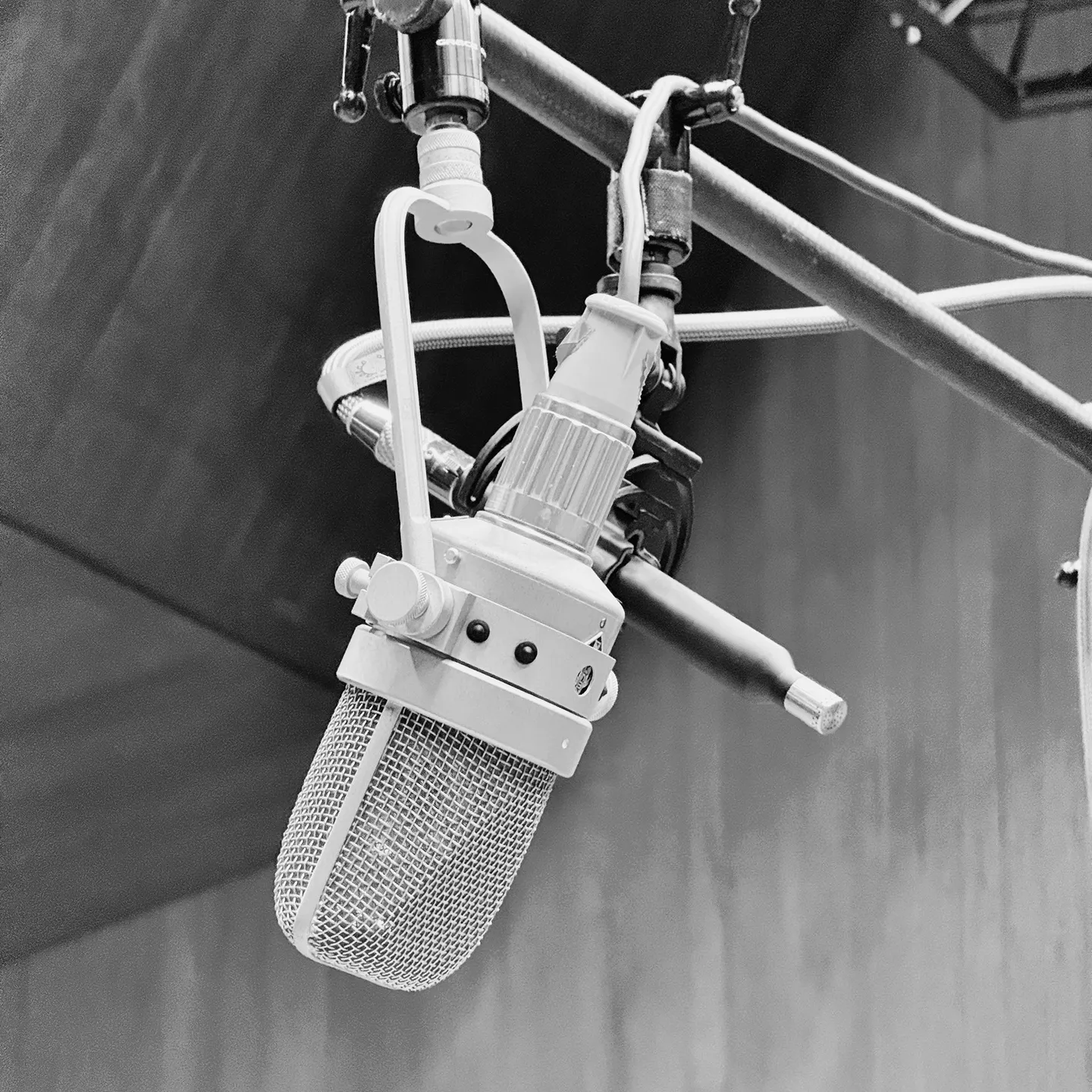
Our regular main mics are the Josephson C617 with Microtech Gefell MK221 capsules, of which we have a matching immersive set, and which we use for every single recording since 2022. Directly underneath them, we hung a pair of Neumann M 50c tube microphones from Polyhymnia’s collection. And a matched pair at that. These two may have been a pair since the day they left the factory, and here they are, decades later, still vibing side by side. Adorable.
We placed the trio in a circle around the mics. Both pairs pointed at the piano and the bass, which kept Joe’s drums a bit more polite in the mix. (remember this detail, it’ll come back later)
Afterwards, we gained both pairs to be exactly just as loud, and with the same peaks. I then rain the 352.8kHz 64bit floating point files straight out of the DAW through some analyses. And since “it sounds warmer” is not a measurement, no matter how many audiophile forums say otherwise, here’s the deal.
Meet the contestants
The Neumann M 50 came out in 1951, developed by Neumann together with the NWDR (German broadcasting company). Its party trick was a 12mm capsule, then considered small, which was mounted in a 40mm acrylic sphere. For low frequencies, it’s a plain omni. Above around 1 kHz the sphere makes it increasingly directional, and on-axis, it gets a high-frequency lift of roughly 5 to 6 dB.
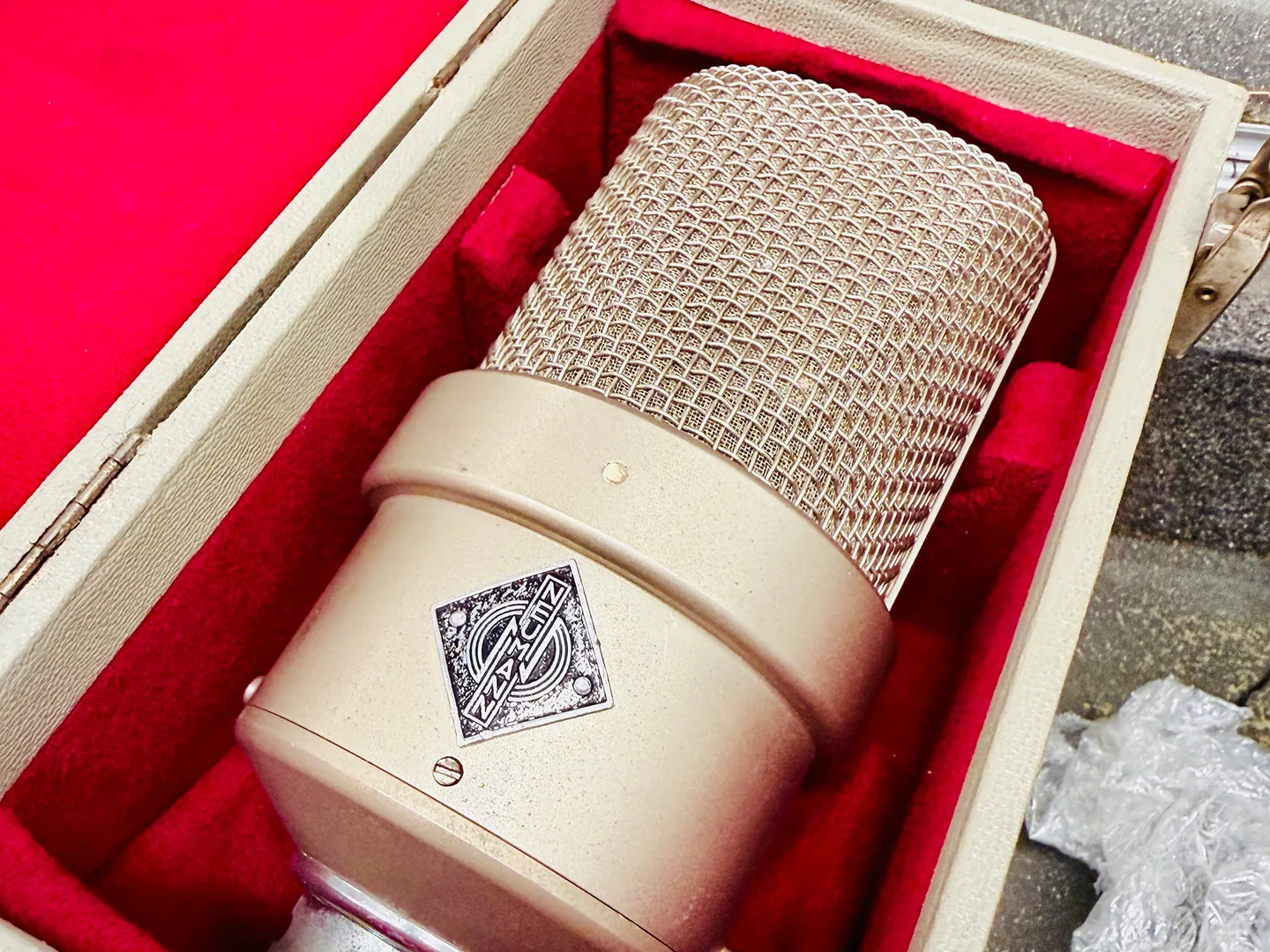
This treble lift is on purpose: you’re supposed to hang it high above an orchestra, and it makes up for the high frequencies you lose over distance (pesky air). Decca liked this mic so much that the M 50 became the backbone of the famous Decca Tree.
Ours are the M 50c versions: the final revision from around 1965. It’s got a Mylar K 83 capsule and a Telefunken AC701k tube in it. Neumann stopped making the M 50 in 1971, apparently because it too often failed quality control (oops). They did actually bring it back this year as the M 50 V. Fun fact: 1971 was also the year the Philips recording centre moved into the Baarn villa that would later give Polyhymnia its name.
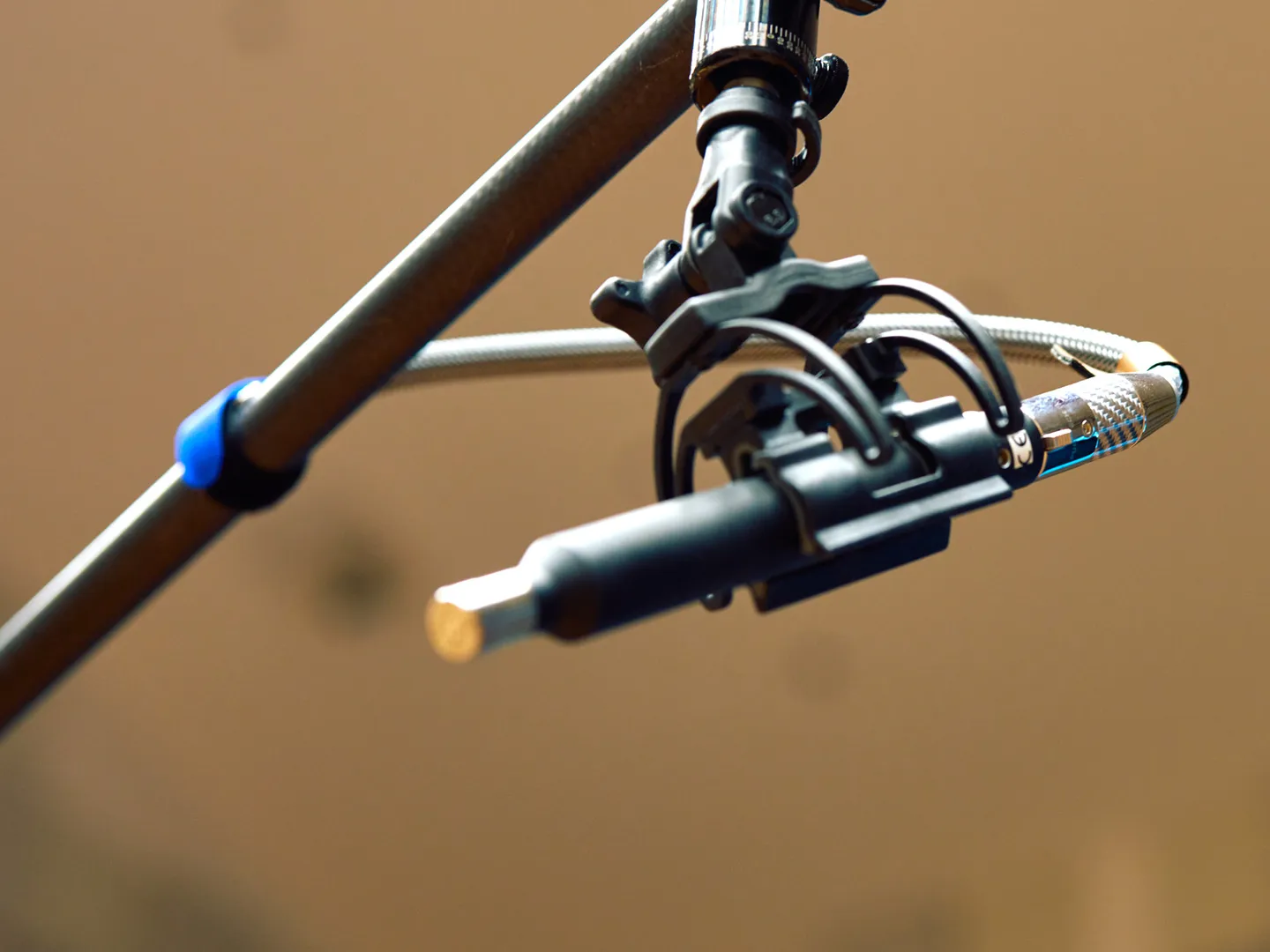
The Josephsons are pretty much the opposite philosophy. The MK221 is a lab-grade half-inch measurement capsule: almost perfectly omnidirectional, 10Hz to 20kHz within 1dB, 14dB-A self-noise, and our matched immersive set is matched within 0.5dB. They just tell you what’s there, which is either refreshing or rude, depending on the musician.
On to the measurements
We’re almost ready for you to listen to the audio. But first: the graph below shows you how the M 50 c performs relative to the Josephson, which is the flat blue line. A few things jump out.
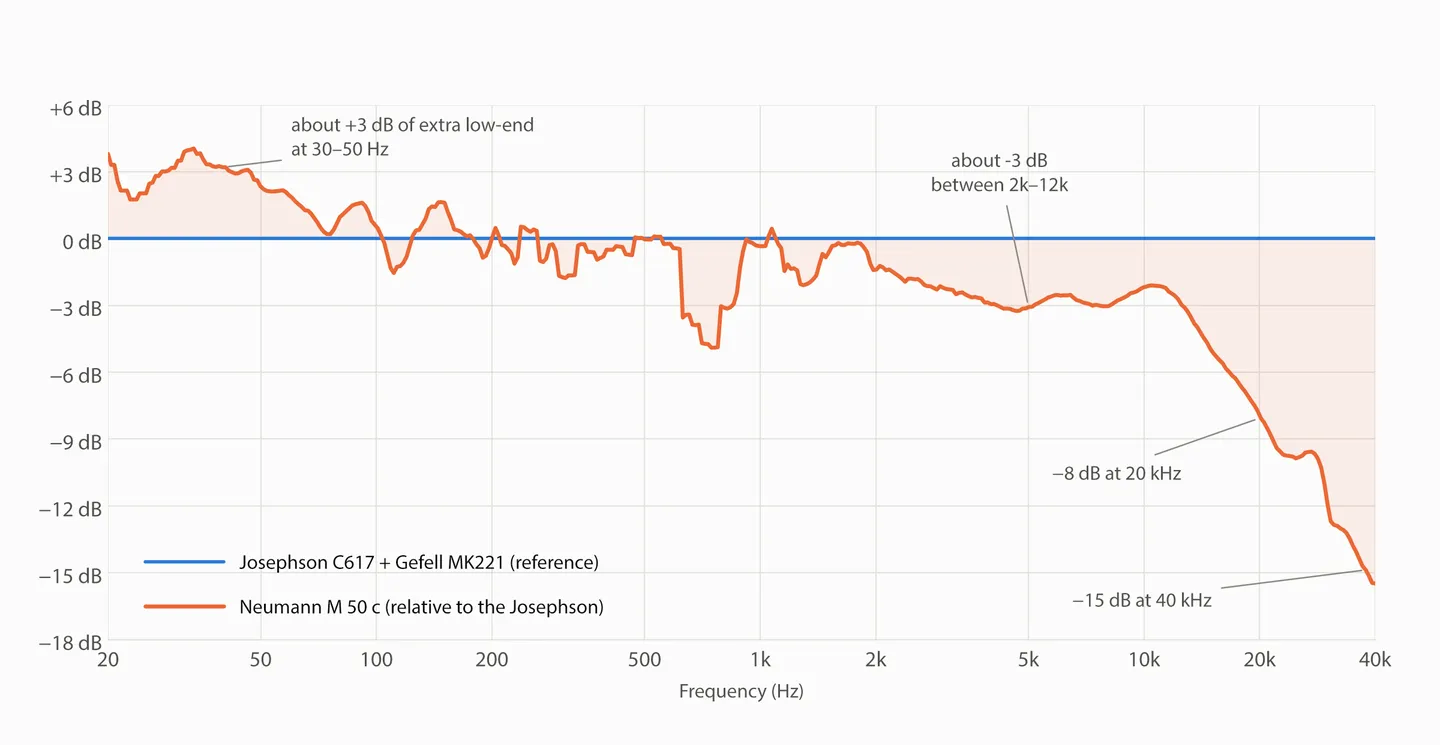
The M 50 c has much more low-end. About 3dB more between 30 to 50Hz. Omer’s low E in the example track sits at 41Hz, so the old Neumanns make Omer put on some pounds (sonically). In the mids, you see these mics are actually rather close.
There’s some “wiggles” below 2kHz, which are simply part of how the room responds to the sources. Even a few centimetres apart, the two mic positions pick up ever so slightly different room modes.
Lastly, the high frequencies roll off, pretty significantly actually. About 3dB less from 2 to 12kHz, and then a big cliff: -8dB at 20kHz and -15dB at 40kHz.
So if anyone tells you vintage mics sound “warmer”, well, congratulations, they’re right. It’s about 3dB of warm, and it costs you a fair bit of top end.
Here’s a graph comparing the frequency responses from the two mics even further:
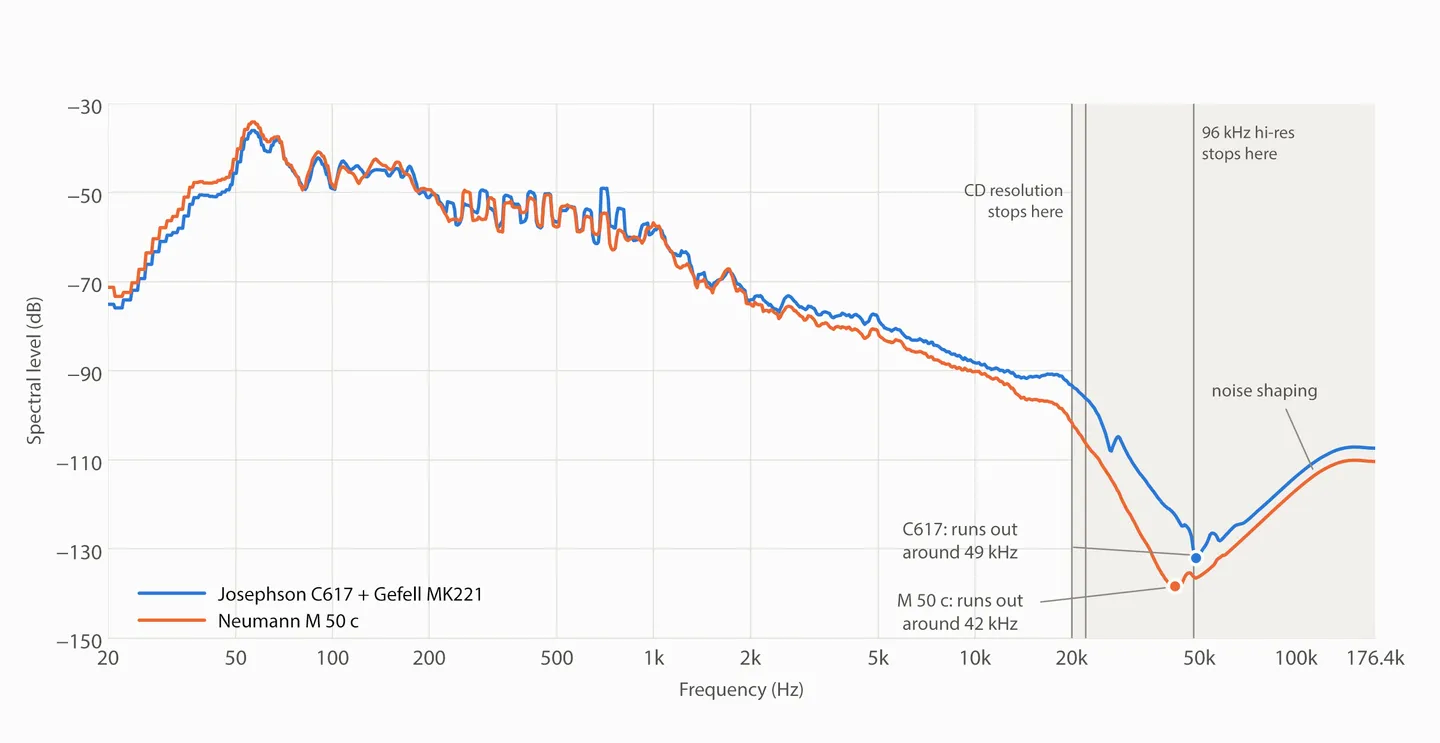
As you can see, the Neumann mics are completely run out around 42kHz, nothing’s there anymore. The Josephson mics keep going until they run out at around 49kHz. That rising hiss above 50kHz, by the way, isn’t the microphones. It’s the converter’s noise shaping. Same exact shape on both pairs, just 3dB apart because of gain staging. Not music.
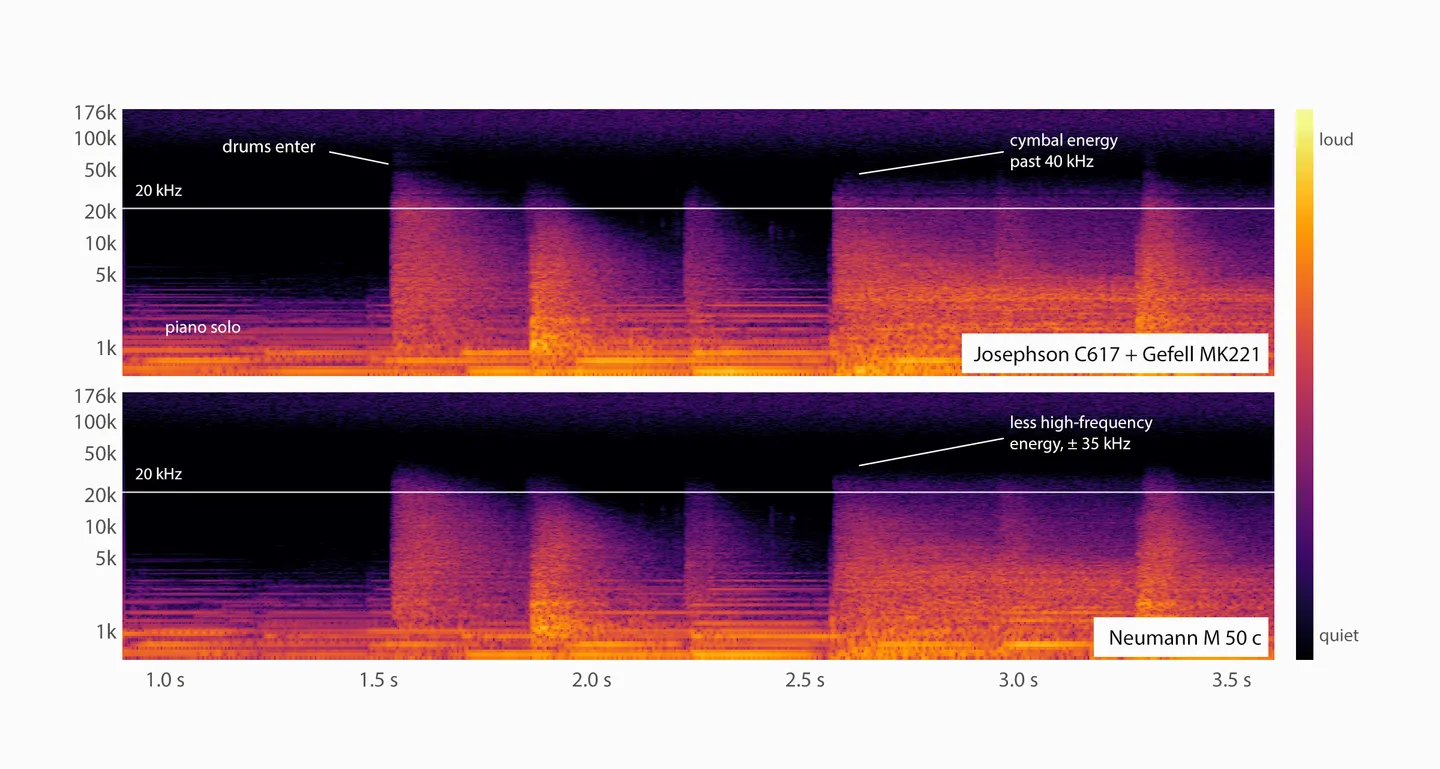
I’ll also include a spectrogram down below:
Off-axis transients
Not just a cool band name. This one actually may actually surprise you when listening to the samples: with the M 50c samples, the transients on the drums were subdued. Quite a lot (about 6dB between 4 and 8kHz). Why is this?
So, remember what I said about aiming the mics? The Josephsons are true omnidirectional mics, they pick up just about anything from anywhere. The Neumanns, not so much. As we described before, they are a lot more directional in high frequencies than they are at low frequencies. And this is precisely what you hear.
That’s “vintage smoothness” explained in two paragraphs.
Let’s have a listen
Enough data and charts. Let’s just have a listen, shall we? Here’s the same 60 seconds four times, all level-matched, so “louder” can’t trick you into hearing “better”.
Start with these two solo files. For the first second and a half it’s just the piano, and the pairs sound remarkably alike. then Joe comes in on the drums. On the Josephsons, his hits have a lot more snap, and the cymbals have more sizzle. The M 50c rounds them off and leaves the room around them intact. The cymbal accents at 23, 35, 46, and 56 seconds are the easiest places to hear it. Around 30 and 41 seconds, listen to Omer’s low frequencies instead. The M 50c pair gives it a lot extra weight.
Then try the two mixes. Of course, things are much more subtle here: the Josephson and Neumann pairs are sitting in the mix, they’re part of it but not the entire thing. The sound of the M 50c mics have a bit more weight, a touch less shimmer. Switch back and forth, on good headphones or speakers, but try not to hear more than there is. Or do. (looking at you, audiophile forum people)
Just FYI, the mix we’re talking about is adding a Neumann TLM 170 to double bass, two Schoeps MK2s to piano, two Ehrlund EHR-M mics above the drums, one near the kick drum, and one near the snare.
So who wore it better?
Honestly? I kinda like both. The Josephson is very TRPTK: modern, measurement-grade, it tells the truth and nothing more. The M 50c is a beautiful vintage mic: more weight, warmth, gentler attacks, and high frequencies that politely clocks out where 1951 didn’t need any more.
60-odd years of progress, and the old ones still put a big smile on your face (at least it does on mine).
Thanks for reading this wall of text. Now have at it, you audiophile forum people!
Oh, and for people who actually listen to music: go check out the album that came from this session. The mix you’ll download is the one with the Josephsons, but we can’t confirm or deny something’s in the works for the other mix…