We've been doing this for eleven years now. Eleven years of careful microphone placement, room acoustics, arguments about whether the harpsichord is 0.3 dB too forward in the mix. Eleven years of dynamic range. And what do we have to show for it? Well, waveforms that look like this:
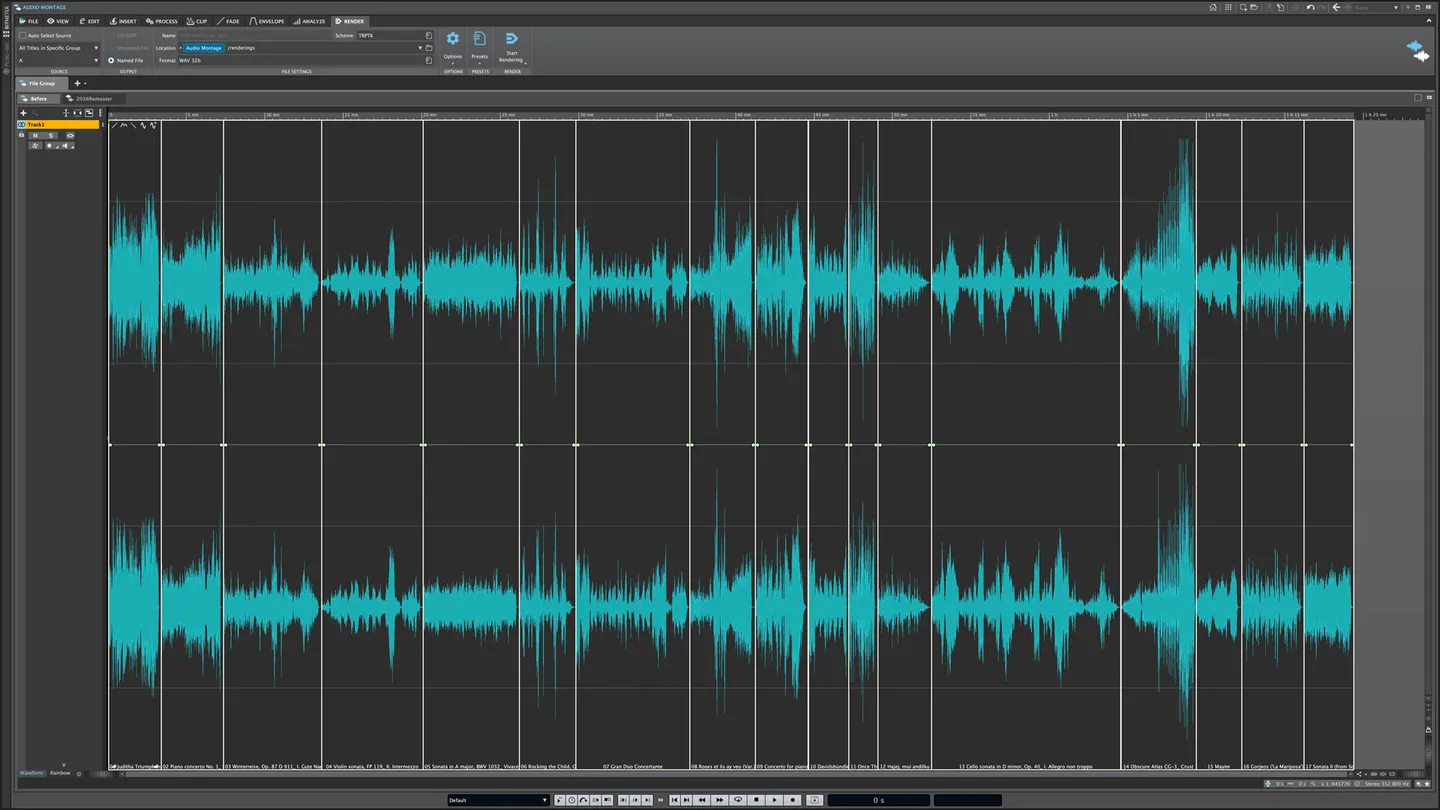
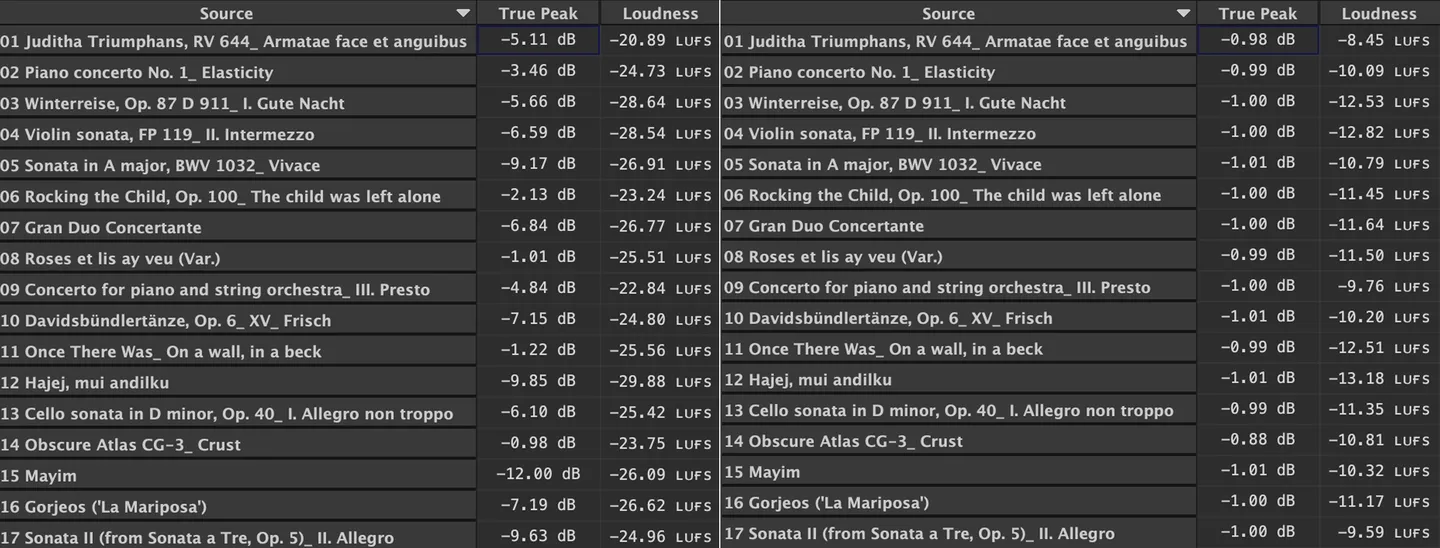
Original masters. True peaks scattered all over the place. Integrated loudness languishing between -20 and -29 LUFS. A momument to restraint, but completely inaudible on your smartphone's speakers.
Look. It's 2026. We've listened. We've grown. And for our 11th anniversary, we've done what the market has been asking, nay, demanding us to do for years.
The REMASTER
Every track from the original nine-year anniversary sampler has been returned to the mastering room at TRPTK Studios, and subjected to a thorough, modern loudness optimisation pass. The results speak for themselves:
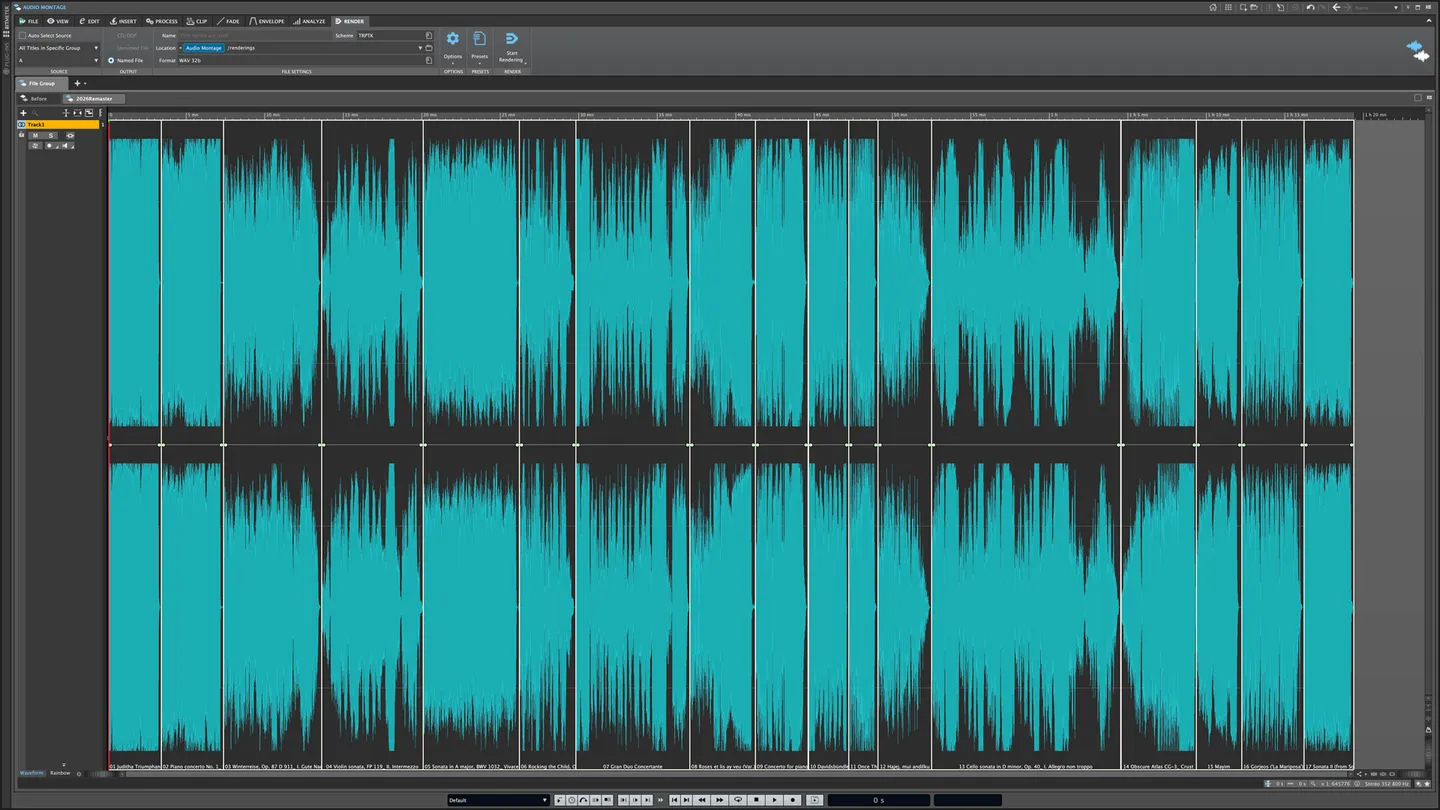
True peaks consistent at -1.0 dBFS. Integrated loudness between -8 and -13 LUFS. Confident. Loud. Proud.
The difference is perhaps best illustrated visually. Here's what eleven years of audiophile mastering philosophy looks like, compared to what listeners in 2026 actually need:
Left: Before. Dynamics. Headroom. The sound of a label that hadn't yet listened to the market. Right: After. Consistency. Presence. The sound of progress.
Notice the "before" waveform. Beautiful, yes perhaps, in a technical sense. But you'd have to constantly reach for your volume know during your listening session. That stuff ends today. Look at the "after" waveform. No volume adjustments needed. Everything's always there, always loud. It fits the audio file like a properly packed suitcase. This is mastering in service of the listener, not the engineer.
On average, every track is now 14.6 LUFS louder than it was. This is obviously and unambiguously an improvement. You get more audio for your dollar, and in these troubling times, that's what we all need, right?
Feel free to stream or buy the new 2026 REMASTER of the TRPTK nine-year anniversary sampler from the link down below.